

When your eCommerce store offers custom product options like size, color, material, bundling, or custom configurations, it stops being just another online retailer and starts becoming a destination. The eCommerce landscape has never been more competitive. Shoppers today expect more than just a product listing. They want choices. They want to feel like a product was made for them.
Customizable product options are not just a nice feature. They are a core part of any serious eCommerce growth strategy. Brands that invest in product option flexibility consistently see higher conversion rates, lower return rates, and stronger customer loyalty. If you are not prioritizing this in your store, you are leaving growth on the table.
TL;DR ( Too Long, Didn’t Read?)
Custom product options in eCommerce allow shoppers to customize what they buy, from color and size to bundles and configurations. Here is a quick glimpse of why it matters:
| What It Covers | |
| What are flexible product options? | Color, size, bundles, custom configs, subscriptions, and more |
| Why does it matter for growth? | It directly affects conversions, AOV, returns, loyalty, and SEO |
| How many reasons does this blog cover? | 7 key reasons, each backed by research and real data |
| Who is this for? | eCommerce store owners, marketers, and growth strategists |
| What will you walk away with? | A clear case for making product option flexibility a core part of your eCommerce strategy |
What Are Custom Product Options in eCommerce?
Before diving into the reasons, it helps to define what we mean by “flexible product options.” In eCommerce, this refers to any mechanism that allows a shopper to customize or configure a product before purchasing. Common examples include:
- Size and color variants
- Material or finish choices
- Bundled product combinations
- Add-on or upsell selections at the product level
- Custom text, engravings, or personalization fields
- Quantity-based pricing tiers
- Subscription vs. one-time purchase toggles
Each of these options gives the buyer more control. And more control leads to more confident buying decisions.
7 Reasons Why Custom Product Options Matter for eCommerce Growth Strategy
So, why does it matter to provide customers with customizable product options, and how does it impact your Shopify growth strategy? Below, we have explained 7 key reasons,
1. Custom Product Options Increase eCommerce Conversion Rates
One of the most direct benefits of offering custom product options is the lift in conversion rate. When shoppers find exactly what they need without having to settle or search elsewhere, they buy.
Research from Baymard Institute shows that 17% of US online shoppers have abandoned a cart because the checkout process was too complicated, and a major factor in that complexity is when product options are hard to navigate or missing entirely.
The logic is simple. A shopper looking for a blue, large, matte-finish water bottle who can select all three attributes from a single product page is far more likely to convert than one who has to wade through separate listings or guess at availability.
When product options are presented clearly and intuitively, friction drops. When friction drops, conversions rise. This is one of the most well-documented relationships in eCommerce UX research.
2. Product Variants And Customization Boost Average Order Value
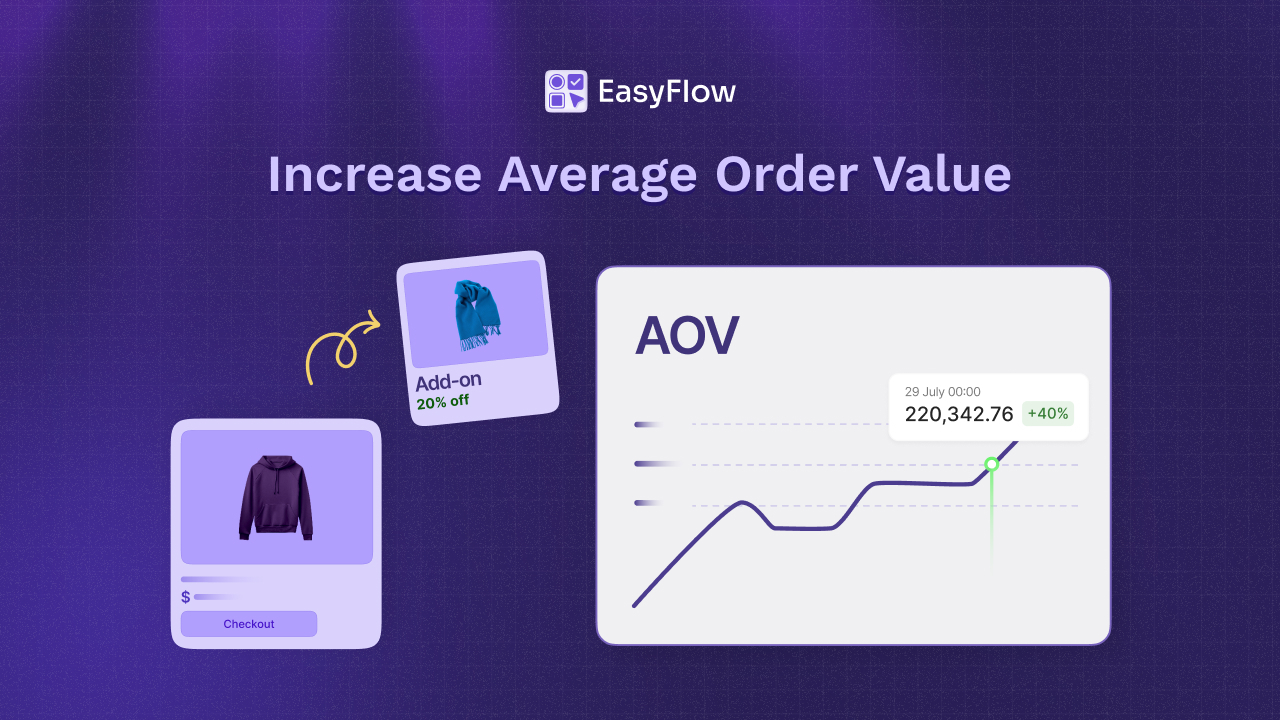
Flexible options are one of the most underrated strategies for increasing average order value. When done right, they naturally encourage shoppers to spend more.
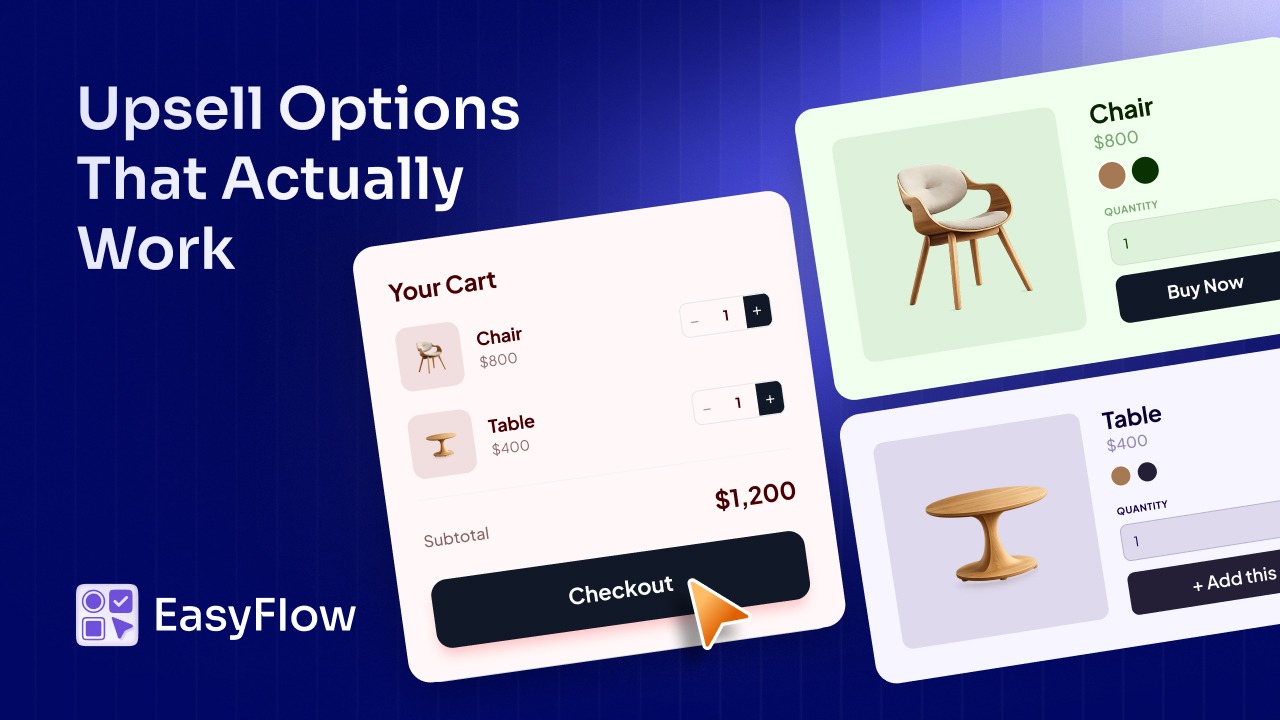
Consider how this works in practice. A customer adding a laptop to their cart might be offered a configuration panel. Do they want 8GB or 16GB of RAM? A standard or extended warranty? A matching sleeve? Each additional selection is an opportunity to increase the transaction value without requiring a separate upsell campaign.
According to a study by McKinsey, personalization can deliver five to eight times the ROI on marketing spend and can lift sales by 10% or more. Product-level customization is one of the most direct forms of personalization an eCommerce store can offer.
When your product pages support flexible configurations, you create natural upsell and cross-sell moments that feel helpful rather than pushy. That is a significant advantage.
3. Product Options Reduce Return Rates And Customer Complaints
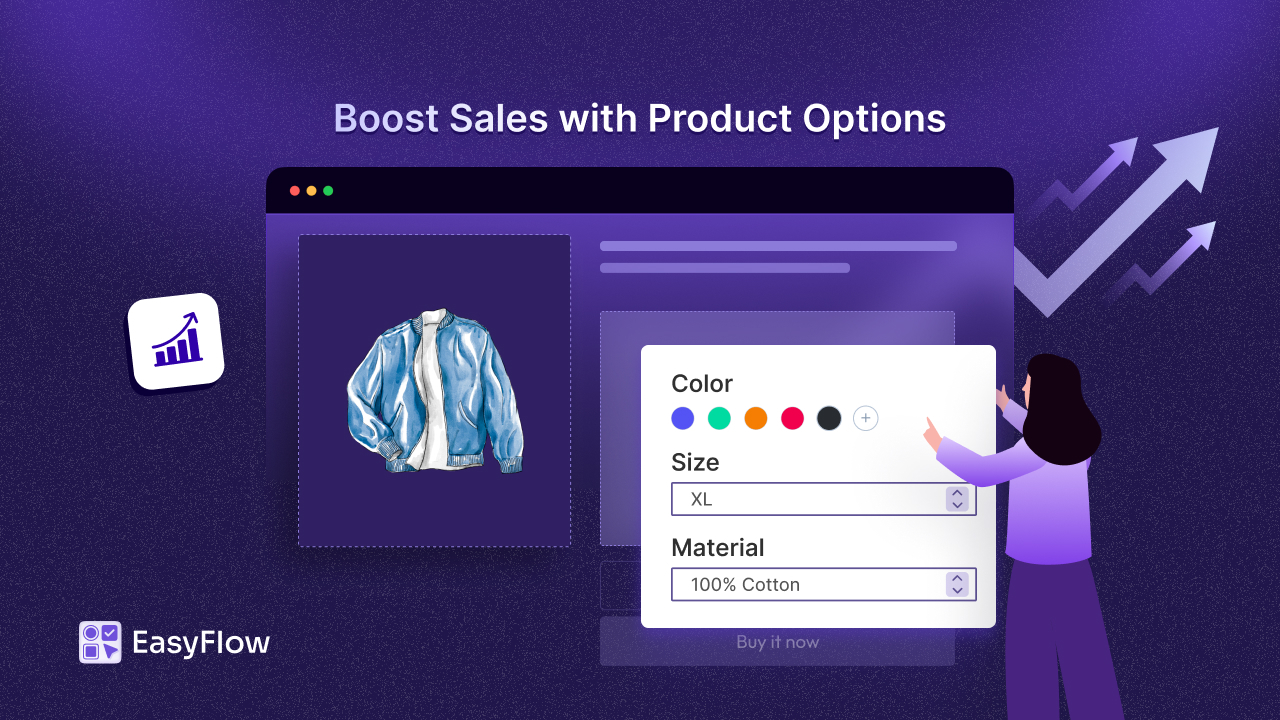
Returns are one of the biggest cost centers in eCommerce. The average eCommerce return rate sits at around 20 to 30 percent, depending on the category, according to data from the National Retail Federation.
A large portion of those returns happens because the customer received something that did not match their expectations. Wrong size. Wrong color. Not the configuration they thought they were ordering.
When your store offers clear, well-structured product options with accurate previews, size guides, and configuration summaries, customers make better decisions upfront. Better decisions mean fewer returns. Fewer returns mean lower operational costs and higher net margins.
This is not just about saving money. It is also about protecting your brand reputation. A shopper who returns a product because of a mismatch is unlikely to leave a positive review or come back. A shopper who gets exactly what they configured is a candidate for repeat purchase.
4. Flexible Product Configurations Improve SEO And Organic Traffic
This is a benefit that many eCommerce store owners overlook. Flexible product options, when implemented with good technical SEO practices, can meaningfully expand your organic search footprint.
Here is how it works. When you offer product variants, each significant configuration can generate unique, indexable product pages or filtered URLs. A shopper searching for “red leather wallet for men” is looking for something very specific. If your store has a product page optimized for that exact combination, you have a strong chance of ranking for that long-tail keyword. Long-tail keywords, those with three or more words, typically account for 70% of all web searches, according to research cited by Ahrefs. Many of these searches are highly purchase-intent driven. A shopper typing “navy blue linen blazer size 40” is very close to buying.
By structuring your product variants with clean URLs, descriptive meta tags, and unique page content for each configuration, you can capture significant organic traffic that your competitors miss. This makes flexible product options a direct contributor to your SEO growth strategy.
5. Product Option Flexibility Drives Customer Loyalty
Customers who feel understood come back. That is one of the foundational truths of retail, and it applies directly to eCommerce product options.
When a shopper successfully configures a product to their exact preferences and has a great experience with it, they associate that satisfaction with your brand. The next time they need something similar, they return to the store that let them get it right the first time.
Customizable product options also enable a more personalized shopping experience. If your platform saves customer preferences, such as their preferred size, usual material choice, or frequently bundled items, you reduce the friction on every subsequent visit. Returning customers shop faster and convert at higher rates than new visitors.
A report by Bain and Company found that increasing customer retention rates by just 5% can increase profits by 25 to 95 percent. Flexible, satisfying product experiences are a key driver of that retention.
6. Flexible eCommerce Product Options Enable Better Inventory
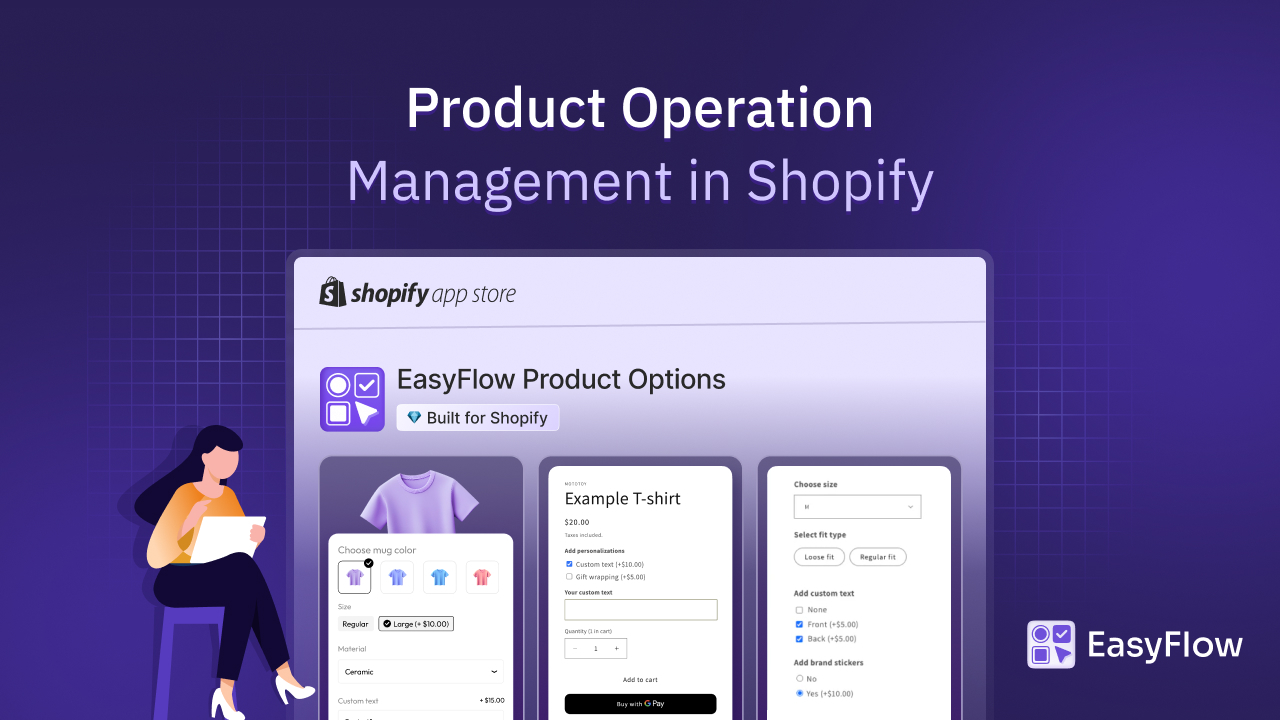
This is a more operational reason, but it has significant implications for long-term eCommerce growth. When your product catalog is structured around flexible variants, you gain much better data about what your customers actually want.
Instead of guessing which product to stock, you can analyze which configurations are being selected most frequently. You see which color sells out first. You know which bundle is most popular. You understand which size is consistently back-ordered. This data makes your buying and inventory decisions far more precise.
Better inventory decisions mean less capital tied up in slow-moving stock, fewer stockouts on popular configurations, and a healthier overall margin profile. For growing eCommerce brands, this kind of data-informed operation is a serious competitive advantage.
Beyond inventory, this data also informs your product development roadmap. If a particular product configuration is consistently the first to sell out, it signals growing customer demand in that area and helps shape future offerings. As Bain & Company highlights in its research on customer retention, understanding customer preferences is key to long-term growth. Flexible options are not just a customer-facing feature. They are also a valuable source of business intelligence.
7. Product Customization Supports in Creating Differentiation
The eCommerce market is saturated. In almost every category, shoppers have dozens or hundreds of choices. Competing on price alone is a race to the bottom. Competing on flexible, thoughtful product options is a path to a durable competitive moat.
When your store allows shoppers to configure a product to their specific needs, you move beyond commodity territory. You are no longer selling a generic item. You are offering a tailored solution. That shift in positioning changes the entire customer relationship.
Premium brands in categories like apparel, electronics, home goods, and beauty have leveraged product customization to command higher prices and build loyal audiences. Nike ID, Build-A-Bear, and Burrow Furniture are all examples of brands that have made configuration a central part of their value proposition.
You do not have to be a global brand to apply this strategy. Even a small eCommerce store offering thoughtful, well-designed product options can differentiate itself meaningfully from competitors who offer a one-size-fits-all catalog.
How to Implement Customizable Product Options Effectively
Knowing why flexible options matter is one thing. Knowing how to implement them well is another. Here are the core principles to guide your approach.
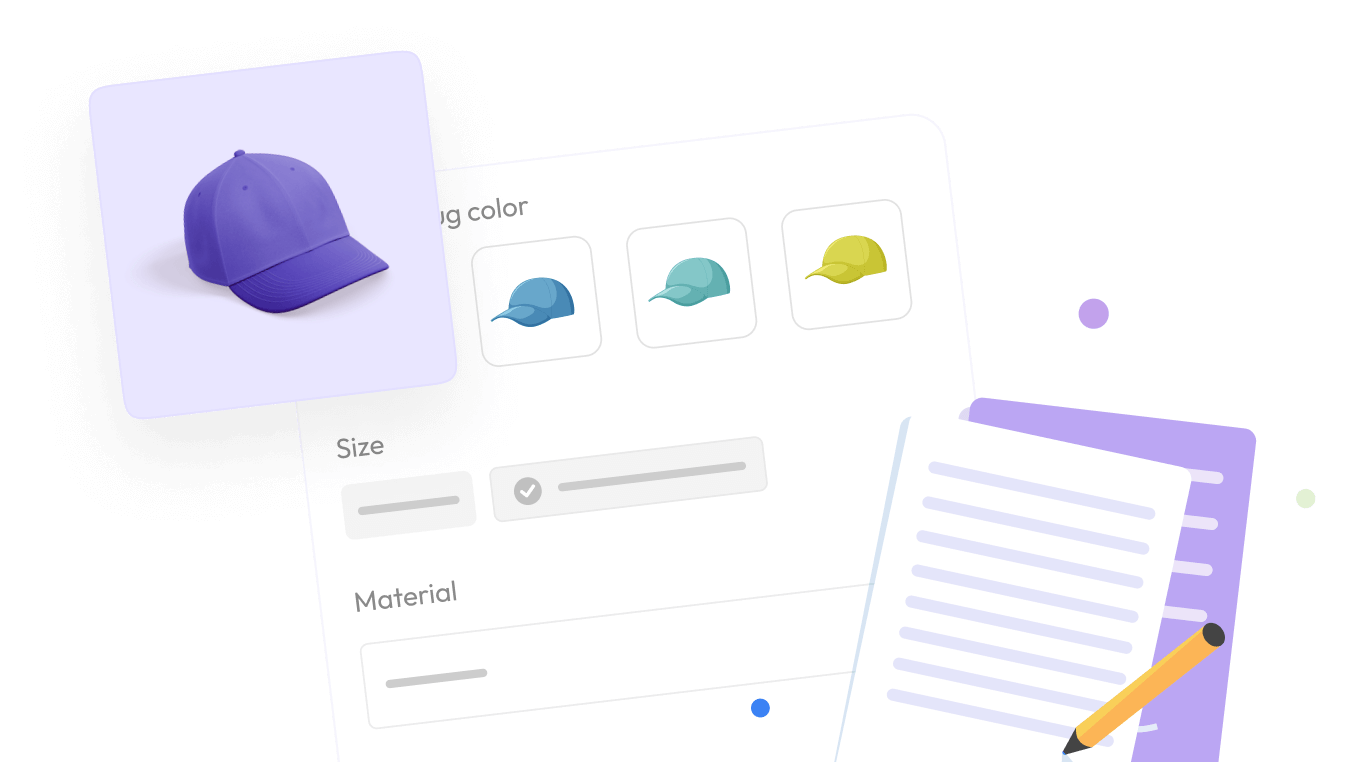
- Keep the interface clean and intuitive: Too many choices presented poorly can overwhelm shoppers and increase bounce rates. Use visual selectors, color swatches, and clear labels. Group related options logically. Show the shopper exactly what they are getting with each selection.
- Update price and availability in real time: When a shopper selects a configuration, the price and stock status should update instantly. Surprises at checkout cause abandonment.
- Use conditional logic to simplify choices: If a customer selects a small size, only show colors available in that size. Conditional option display reduces confusion and prevents orders for configurations you cannot fulfill.
- Optimize product pages for SEO at the variant level: Each significant configuration should have its own URL, title tag, and meta description, where possible. This expands your organic search visibility substantially.
- Collect and analyze option selection data: Treat variant data as business intelligence. Review it regularly. Use it to inform inventory, merchandising, and product development decisions.
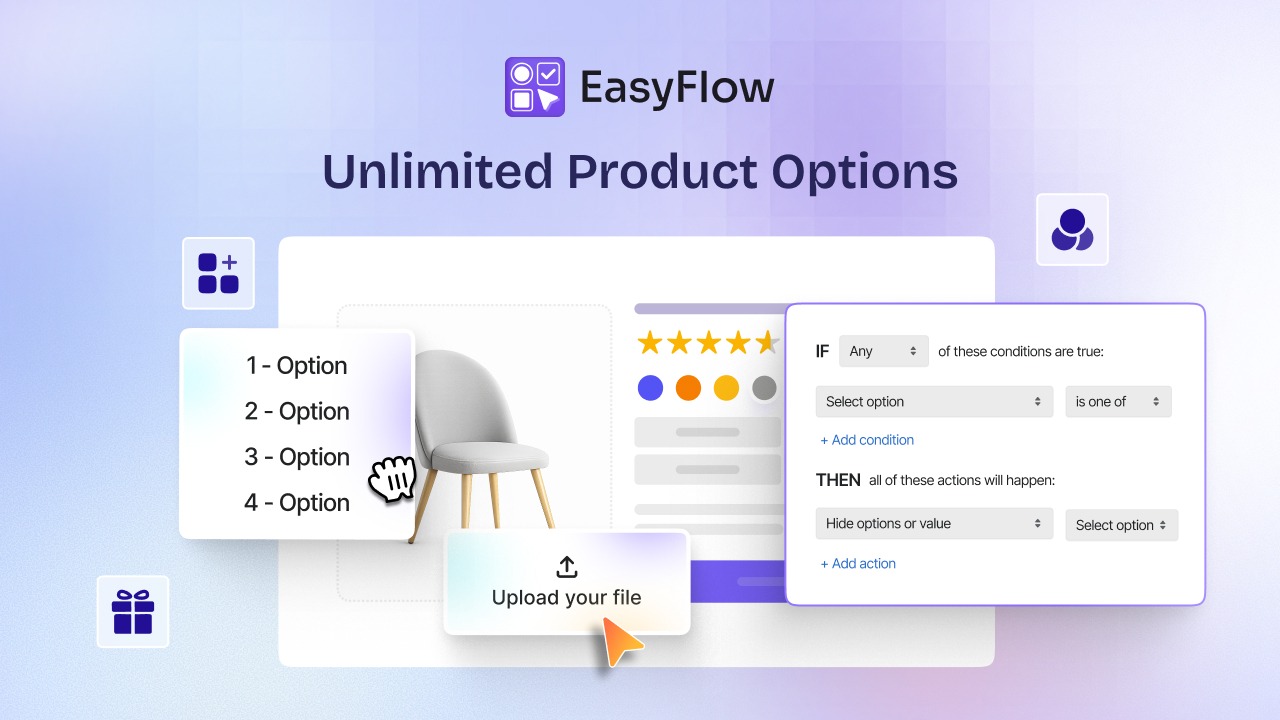
At scale, managing product options manually becomes complex. This is where structured tooling becomes essential. To make implementing product options easy, you can use advanced product options apps in Shopify. EasyFlow is one such app that you can use.
Built for efficiency and scale, this app supports unlimited product variants and options. Its advanced conditional logic lets you control exactly which options appear based on a customer’s previous selections, making it a strong fit for stores that need both performance and flexibility at the same time.
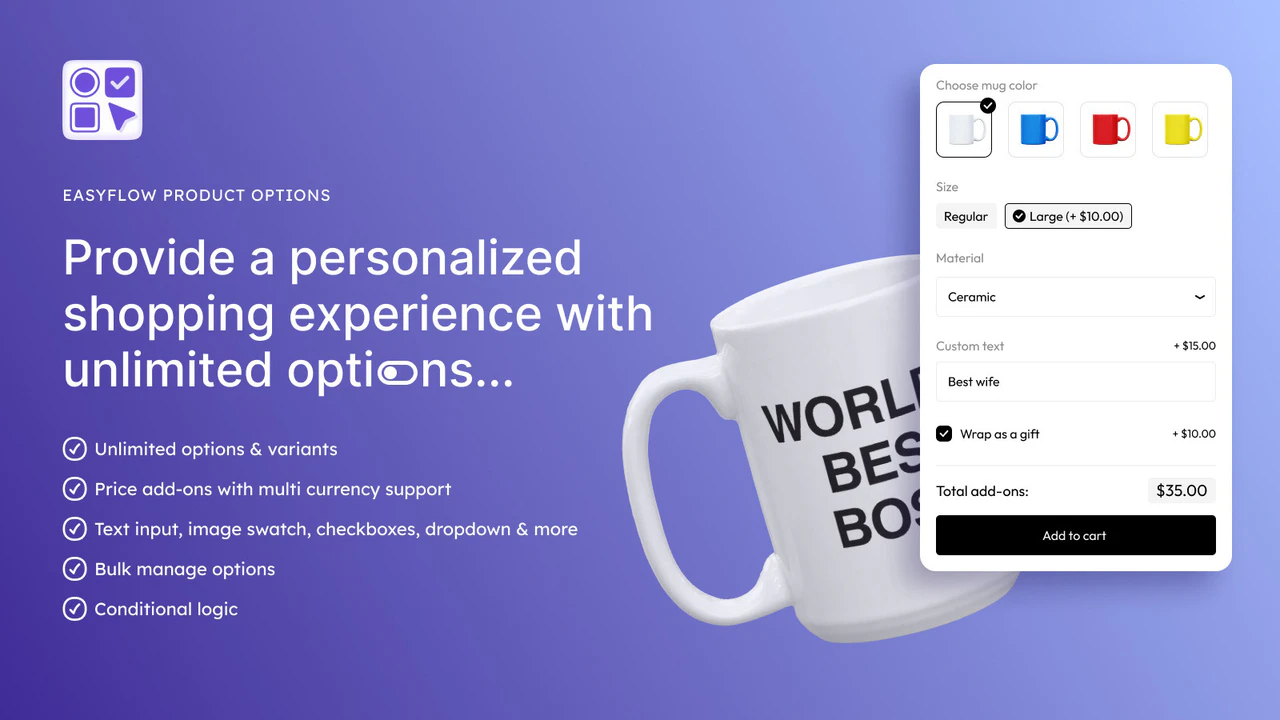
For products requiring more than three option types, or for merchants who want to offer personalized inputs like custom text fields or dynamic options that respond to shopper choices, EasyFlow delivers the capability to handle all of that seamlessly. If you want to know more, you can visit the website. There is a detailed documentation page with step-by-step tutorials as well. Also, to have useful articles, guides, and insights, you can check out the blog page as well.
Common Mistakes to Avoid with eCommerce Product Options
Even well-intentioned stores make mistakes when building out their product option systems. Here are the most common ones.
Offering Too Many Options without Structure
A common mistake noticed in eCommerce product options is offering too many options, but without a user-friendly structure. Hick’s Law tells us that more choices lead to slower decisions and higher drop-off rates.
If you have many options, organize them into clear categories and use progressive disclosure to reveal advanced options only when needed. You can use the product options app, like EasyFlow as well to simplify the process.
Inconsistent Naming Conventions
Another common mistake is inconsistent naming conventions. If one product calls a color “Navy” and another calls it “Dark Blue,” you create confusion and undermine trust.
Before starting to set up product options, decide how the naming/labels should be and standardize your option labels across your entire catalog. This will help you to configure product options faster with consistency.
Handling Unavailable Configuration Options
Many stores fail to handle out-of-stock variants gracefully. Showing a configuration as available when it is not destroys trust immediately. Always clearly mark unavailable configurations and offer alternatives or back-in-stock notifications.
Use Custom Product Options As Part of Your Shopify Growth Strategy
Personalised or customizable product options are not a luxury feature reserved for large brands with big development budgets. They are a fundamental component of a smart eCommerce growth strategy. They increase conversions, raise average order value, reduce returns, improve SEO, build loyalty, sharpen inventory decisions, and differentiate your brand.
The stores that win in eCommerce are the ones that make it easy for shoppers to get exactly what they want. Flexible product options are how you do that at scale.
If you have not yet made product option flexibility a strategic priority for your store, now is the time to start. The competitive advantage it creates compounds over time, and the brands investing in it today will be significantly harder to compete with tomorrow.
If you found this blog helpful, please subscribe for more expert guides, tutorials, and tips on unlocking the full potential of your Shopify store.