

Shoppers are no longer starting product searches the way they used to. Instead of typing a query into Google and scrolling through ten blue links, more of them are asking ChatGPT, Perplexity and Google AI Mode for direct recommendations. The shift is already showing up in revenue, and most Shopify merchants are not yet set up for it.
Here is the friction. Traditional Shopify SEO was built around keywords. The AI-driven search for Shopify is built around attributes, context, and very specific shopper intent. When someone asks an AI assistant for “a waterproof hiking backpack under 100 dollars with a laptop sleeve,” the model needs structured product data to know whether your store has a match. Generic product titles and shallow descriptions get skipped.
This is where product options become unexpectedly important. They are not just a UX detail. They are one of the clearest signals AI shopping assistants use to decide which products to surface. This post explains exactly how product options help AI search recognize, recommend, and prioritize your Shopify products, and what to do about it.
AI Search is Changing How Shoppers Discover Products Online
The shift to AI-driven discovery is not a future trend. It is already moving real revenue. AI-referred traffic to US retail sites grew sharply during the 2025 holiday season, based on Adobe Analytics data cited by Shopify, with AI-referred shoppers converting roughly 31 percent more often than visitors from other channels. That is a serious change in buyer behavior inside a single year.
Search interest in AI shopping agents has also tripled in the past year, according to Exploding Topics data referenced by Search Engine Land. Consumers are getting comfortable asking AI to shortlist, compare, and even purchase products on their behalf. For Shopify merchants, that means the first impression of your product no longer happens on your storefront. It happens inside a chat window.
The Shift from Keyword Search to Conversational Queries
Old search behavior looked like “running shoes size 10.” New search behavior looks more like “what are the best lightweight running shoes for flat feet under 120 dollars that ship to Canada?” The AI parses every detail of that query and tries to match it against products with rich, structured data.
What AI-Driven Search for Shopify Means for Your Store’s Discoverability
If your product pages do not describe attributes the way shoppers ask about them, AI cannot recommend you. The connection between detailed product information and AI visibility is direct, and product options sit right at the center of it.
What is AI-Driven Search for Shopify And How AI Shopping Assistants Read Your Store?
To understand why product options matter, it helps to first see how AI actually reads your store. AI-driven search refers to the new layer of product discovery happening inside assistants like ChatGPT, Perplexity, Google AI Mode, Microsoft Copilot, and Gemini. Instead of returning a list of links, these tools answer shopper questions with direct product recommendations pulled from structured catalog data.
For Shopify merchants, the biggest infrastructure change arrived with Shopify Agentic Storefronts, which now syndicate eligible merchant catalogs to major AI platforms automatically. Shopify Catalog formats product attributes, pricing, availability, and store policies in a way AI models can interpret. The catalog passes that information through to AI partners, and when shoppers ask conversational questions, the agent retrieves the most relevant product data.
How AI Shopping Assistants Parse Product Data?
AI models do not see your product photography or read your brand voice the way a human does. They parse structured fields. Titles, attributes, variants, materials, dimensions, availability, and reviews all feed into how an AI decides whether your product matches a shopper’s question. Missing or vague fields cause AI to skip your store in favor of one with cleaner data.
The Role of Shopify Catalog And Structured Attributes
Eligibility is not the same as visibility. Being syndicated to ChatGPT or Perplexity does not guarantee your products get recommended. The platforms still pick winners based on which catalogs answer the shopper’s question most precisely. That selection process is where product options become a real lever.
Why Product Options Matter for AI Search Visibility
Here is the core mechanic worth internalizing. AI assistants reward stores that answer specific buyer questions with specific product information. The more attributes you expose, the more queries you can match. Research from product data optimization specialists shows that stores with near-complete attribute data see 3 to 4 times higher visibility in AI shopping recommendations compared to stores with sparse data.
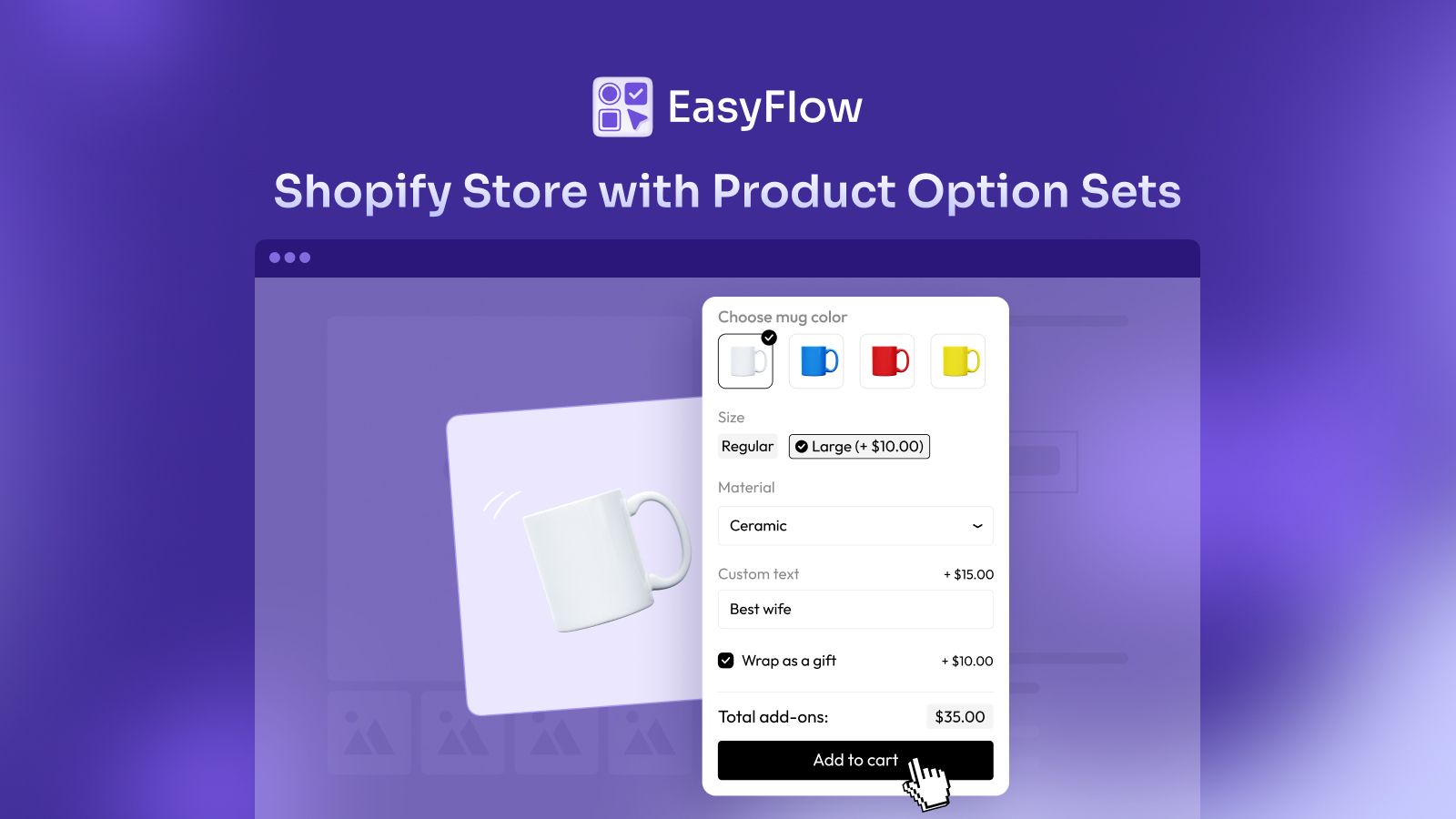
Shopify variants alone do not capture everything a shopper might ask about. A coffee brand selling beans needs to expose roast level, origin, flavor notes, brewing method, grind preference, and bag size. A custom apparel store needs to capture material, fit, color, print location, and uploaded artwork. A B2B store needs to handle dozens of configuration combinations on a single product. None of these fit neatly inside a basic variant grid.
Long-tail Conversational Queries Demand Attribute-rich Matches
Analysis from Littledata on AI-driven product discovery shows that AI learns directly from structured product attributes, variants, and reviews. When a shopper asks for “a chocolatey medium roast single-origin Kenyan coffee,” the AI tries to match each adjective against your product data. If your page is missing origin, flavor notes, or roast level, you become invisible to that query.
Why Vague Product Pages Get Skipped by AI?
Generic titles like “1 kilogram coffee bag” or “cotton t-shirt” do not give AI much to work with. The model cannot infer details that are not exposed in your data. This is the reason product options are no longer just a UX feature. They are a visibility infrastructure for AI search.
How Product Options Help You Win in AI-Driven Search for Shopify
Once the mechanics above are clear, the practical role of product options falls into place. Every option you add gives AI another signal to match against a shopper’s query. This is how product options help you win in AI search visibility at a real, day-to-day level.
Capture Intent-specific Queries with Granular Options
When you let shoppers configure material, size, customization style, finish, compatibility, or any other attribute on the product page, you are also feeding that attribute into your product data layer. As schema specialists have documented, attributes like color, material, size, and intended purpose are exactly what AI uses to match long-tail conversational queries. Every option is effectively a query hook.
Cover Customization Gaps that Pure Variants Can Not Reach
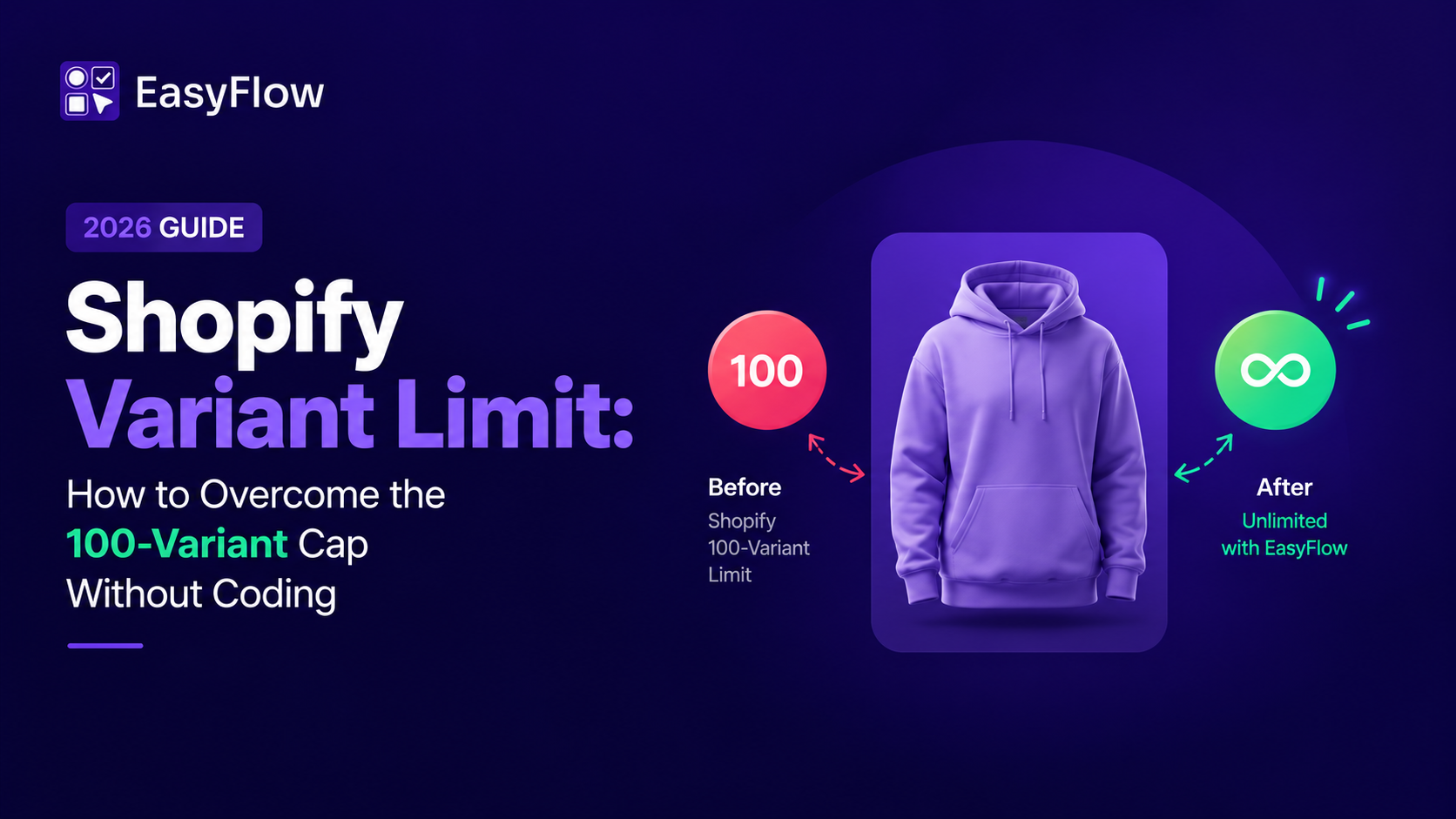
Native Shopify variants max out at three options and 100 combinations per product. That works for simple SKUs, but it breaks for custom-made goods, personalized products, and B2B configurations. Shoppers who want to add engraving, upload a logo, choose add-ons or specify dimensions do not fit inside variant grids. Without a dedicated options layer, those shoppers either bounce or send a support email, and AI never sees the product data behind that customization capability.
Feed AI the Exact Attributes Shoppers Ask About
This is where features like conditional logic rules and the file upload option become valuable for AI search, not just for the shopper experience. When you capture customization requirements at the point of purchase, you also document your product capabilities in a way that shows up cleanly in product content and metadata. Both the human and the machine read your store more clearly.
How Can Shopify Merchants Build Better Product Options for AI Search?
Knowing that options matter is one thing. Building them is another. Closing the gap between what shoppers ask about and what your product pages actually expose comes down to extending Shopify in the places it falls short.
The 3-option, 100-variant ceiling is the most obvious wall. Beyond that, native variants cannot handle file uploads for personalization, cannot show conditional options based on previous selections, and cannot apply automatic price add-ons for customizations. These gaps push merchants into clunky workarounds that hurt the customer experience and leave product data incomplete.
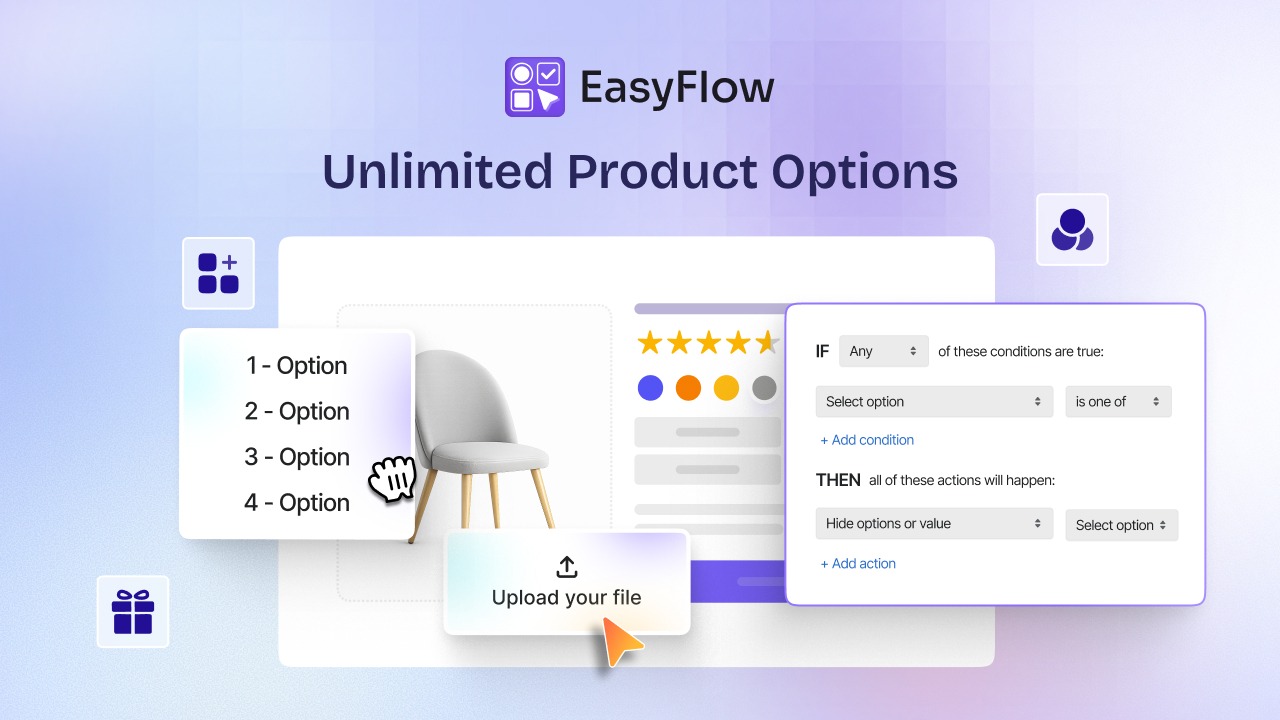
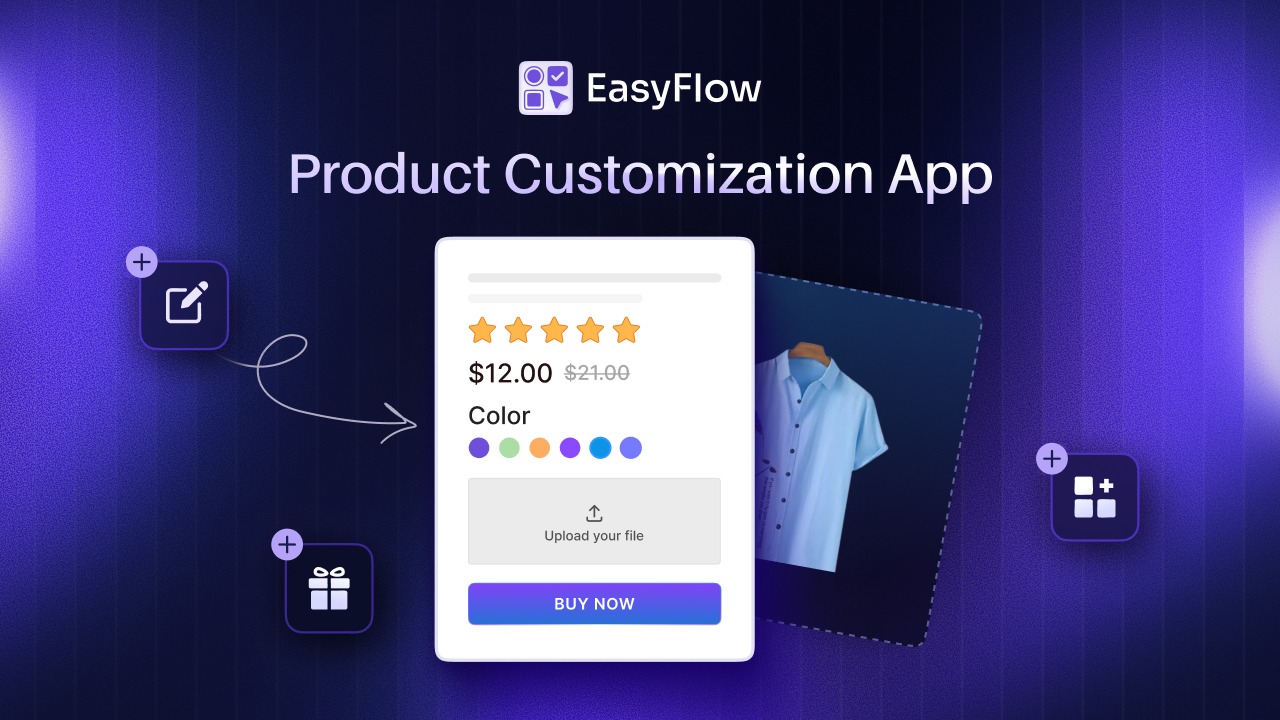
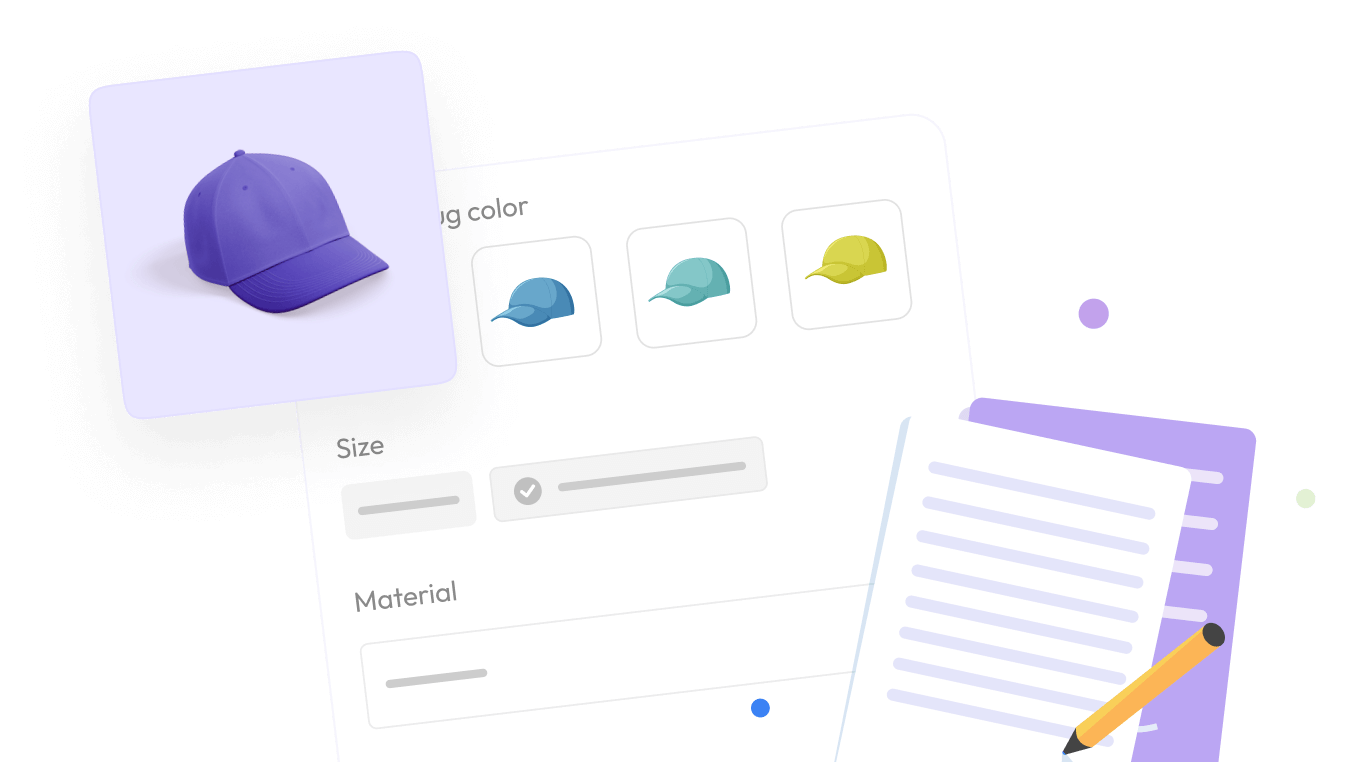
This is where EasyFlow fits naturally. EasyFlow extends Shopify product pages with unlimited custom options, file uploads, conditional logic, and price add-ons, without breaking the storefront experience. For AI-driven search, the practical benefit is that every option a shopper sees becomes an attribute that lives on the product page, which gives AI assistants more hooks to match against conversational queries.
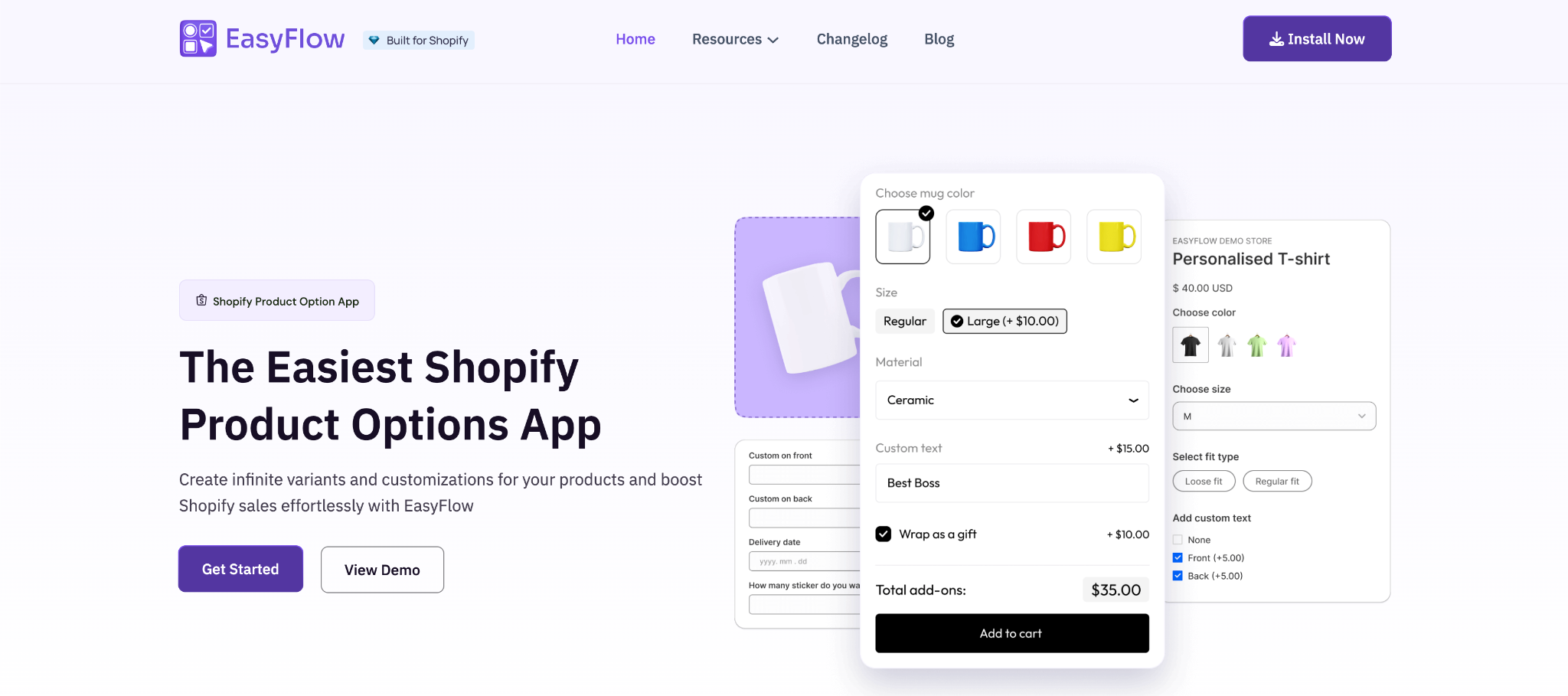
A few use cases show how this plays out in practice. Custom apparel stores can capture print location, file uploads, and material upgrades on a single product. Personalized jewelry brands can show font choices, engraving length, and live price add-ons only when the engraving option is selected. B2B stores can handle 40-plus configuration combinations on one product page without hitting variant ceilings.
The PYMNTS coverage of agentic commerce notes that smaller merchants face the greatest visibility risk in AI search because they rely heavily on discovery channels to reach new customers. Closing the product options gap is one of the highest-leverage moves a small or mid-size Shopify store can make to stay visible as buyers move into AI-driven discovery.
Use the Perfect Product Options App To Get AI-Driven Search for Shopify
AI-driven search is reshaping what it means to be discoverable on Shopify, and three takeaways are worth holding on to. First, AI assistants reward specificity, so the more detailed your product attributes, the more queries you can match. Second, product options are now visibility infrastructure, not just UX polish, because every option becomes a signal that AI can read. Third, merchants who invest in richer, more flexible product configurations today will be the ones AI agents recommend as the channel matures.
If your Shopify store is still relying on basic variants and generic product descriptions, you are leaving AI visibility on the table. Take a closer look at EasyFlow’s product options features to see how customization, conditional logic, file uploads, and price add-ons can turn your product pages into a stronger signal for AI shopping assistants.
If you found this blog helpful, please subscribe for more expert guides, tutorials, and tips on unlocking the full potential of your Shopify store.