
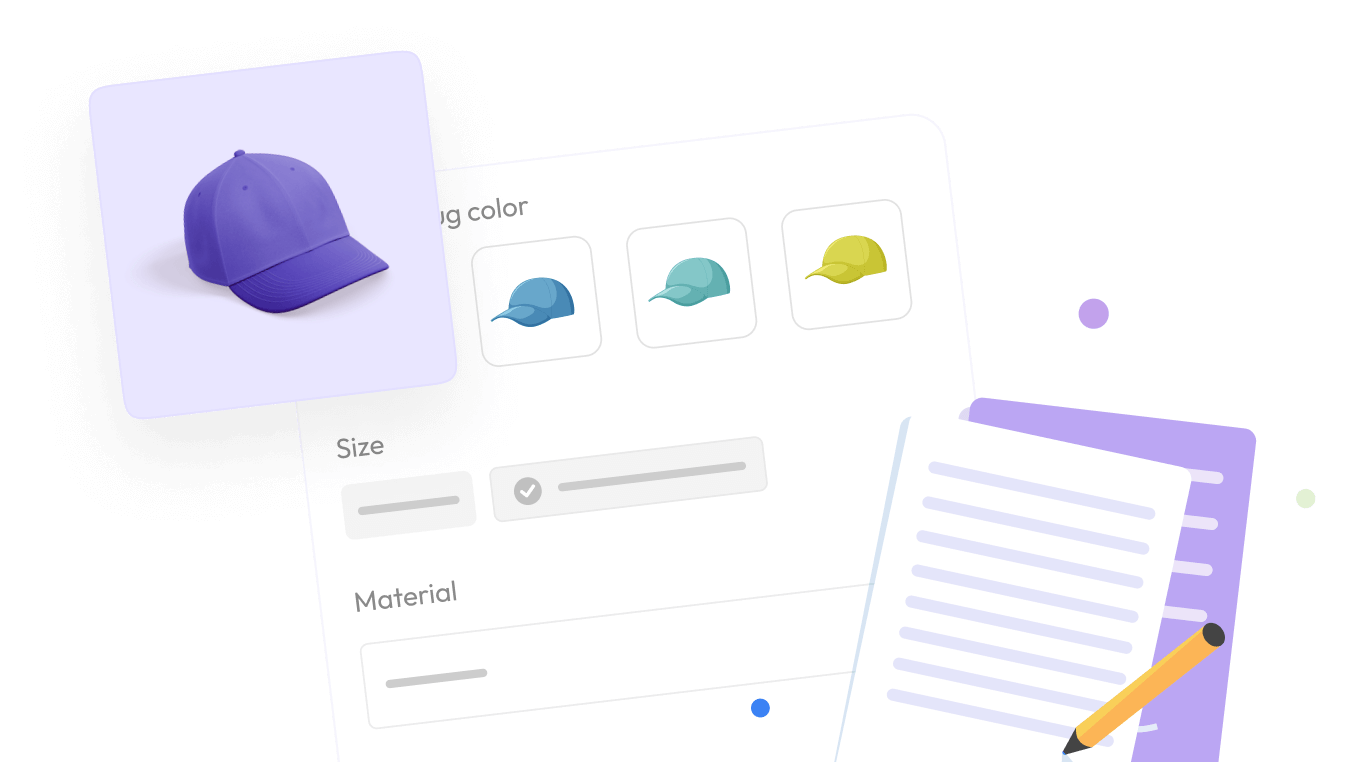

Giving shoppers control over what they buy is not just about adding a feature anymore. It is one of the most powerful psychological levers in your conversion rate optimization toolkit. Here is what statistics say,
| 36% Of consumers expect personalized product experiences Source: tailoor.com | 20% Higher conversion rate for stores offering customization Source: envive.ai | 48% Some shoppers will wait longer for a personalized product Source: thinkpersonal.com |
Let us talk about something every eCommerce store owner wants in common and that is more conversions. It is not just more traffic and lower bounce rates, but real people clicking “Add to Cart” and following through to checkout; that also matters.
Here is the thing, CRO (Conversion Rate Optimization) psychology. The science of why people decide to buy tells us that control is one of the biggest drivers of purchase decisions. And nothing hands control to a shopper quite like letting them customize what they are buying.
In this post, we are breaking down the psychological principles that make customizable products in eCommerce so effective and how smart Shopify product customization can directly boost your bottom line.
What Is CRO Psychology And Why Does It Matter for Product Pages?
So, what is CRO psychology? CRO psychology is the study of human behavior, cognitive biases and emotional triggers that influence a buyer’s decision to convert. It is the “why” behind a purchase and it is far more powerful than any discount code or free shipping offer.
Most store owners focus on the technical side of conversion rate optimization: faster pages, better images, cleaner checkout flows. Those things matter. But the stores that truly win are the ones that understand what is happening in the customer’s mind at every step of the buying journey.
💡 Key insight: According to a Deloitte consumer review, products that allow customization see up to a 20% price premium that shoppers are willing to pay; not because the product is more expensive to make, but because of the perceived psychological value of ownership and personalization.
When a shopper can configure their own product, like choose a color, add a name, pick a size, select a material, several powerful cognitive mechanisms kick in simultaneously. Understanding these mechanisms is the foundation of applying CRO psychology to your product pages.
The 6 Core Psychological Principles Behind Custom Product Options
Let us unpack the exact psychological forces at work when customers interact with custom product options in your store.
| 🧠 The IKEA Effect | 🎯 Autonomy & Control | 🔒 Loss Aversion |
| We value things more when we help create them, even if only slightly. | People are more likely to buy when they feel in charge of the decision. | Personalized items feel harder to “leave behind” than generic ones. |
| 🤝 Identity Alignment | ✨ Endowment Effect | ⬆️ Commitment & Consistency |
| Customization lets shoppers express who they are through what they buy. | Configuring a product creates psychological ownership before purchase. | Time spent configuring creates psychological commitment to completing the purchase. |
1. The IKEA Effect: We Love What We Build
In 2011, Harvard Business School researchers Norton, Mochon and Ariely coined the term “IKEA Effect,” which refers to the tendency for people to place a disproportionately higher value on products they partially create themselves. Their studies showed that people valued self-assembled furniture nearly five times more than identical pre-assembled versions.
Now apply this to eCommerce. When a customer picks their engraving text, selects their color combination, or chooses the fabric for their custom tote bag, they have mentally invested in that product. They feel a sense of authorship. And that authorship translates directly into a higher perceived value and a much lower likelihood of abandoning the cart.
2. Autonomy And the Psychology of Control
Psychologist Edward Deci’s Self-Determination Theory identifies autonomy as a core human need. When people feel in control of a decision, they are more satisfied with the outcome, even if the result is the same as a decision someone else made for them.
In a typical eCommerce store, shopping is passive: you browse what is available and either something fits your needs, or it does not. But with product customization in Shopify, the dynamic shifts entirely. The shopper becomes an active participant. That shift from passive browser to active creator is enormously powerful for conversions.
3. Loss Aversion: Personalized Products Are Harder to Walk Away From
Nobel Prize-winning economist Daniel Kahneman established that people feel losses roughly twice as strongly as equivalent gains. In the context of customizable products in eCommerce, this plays out fascinatingly.
Once a shopper has spent time configuring their perfect version of a product, the idea of not buying it starts to feel like a loss. They are not just walking away from a generic item; they are walking away from their item. The one they designed. That psychological weight pushes the conversion needle forward in a way standard product pages simply can not match.
4. The Endowment Effect: You Already Own It in Your Mind
The endowment effect describes our tendency to overvalue things we perceive as already belonging to us. Research published in the Journal of Marketing Research shows that the more time and choices a consumer invests in configuring a product, the stronger this sense of psychological pre-ownership becomes.
Think about a customer who spends several minutes on your product page choosing between matte black and brushed gold finishes, picking their preferred font for an engraving, and selecting a gift box. By the time they are done, they have mentally “owned” that product. Abandoning the cart now feels like giving something up, not just deciding not to buy.
5. Identity Expression And Self-Concept Theory
Consumers do not just buy products. They buy versions of themselves. Social psychologist Hazel Markus’s research on “extended self” theory shows that our possessions become extensions of our identity. Customized products amplify this effect enormously because the customer has explicitly made choices that reflect their taste, personality and values.
This is why personalized products, monogrammed bags, custom sneakers and engraved jewelry command premium prices and generate intensely loyal customers. The product is not just something they own; it is an expression of who they are.
6. Commitment And Consistency: The Foot-in-the-Door Effect
Robert Cialdini’s famous principle of commitment and consistency states that once people begin a course of action, they feel psychological pressure to see it through.
Every small choice a customer makes while configuring custom product options is a micro-commitment. And each micro-commitment makes the next step, adding to cart, proceeding to checkout, feel more natural and obligatory.
How Shopify Product Customization Directly Impacts Conversion Rates
Now that we understand psychology, let us get practical. How does implementing Shopify product customization actually move the needle on your conversion metrics?
Higher Average Order Value (AOV)
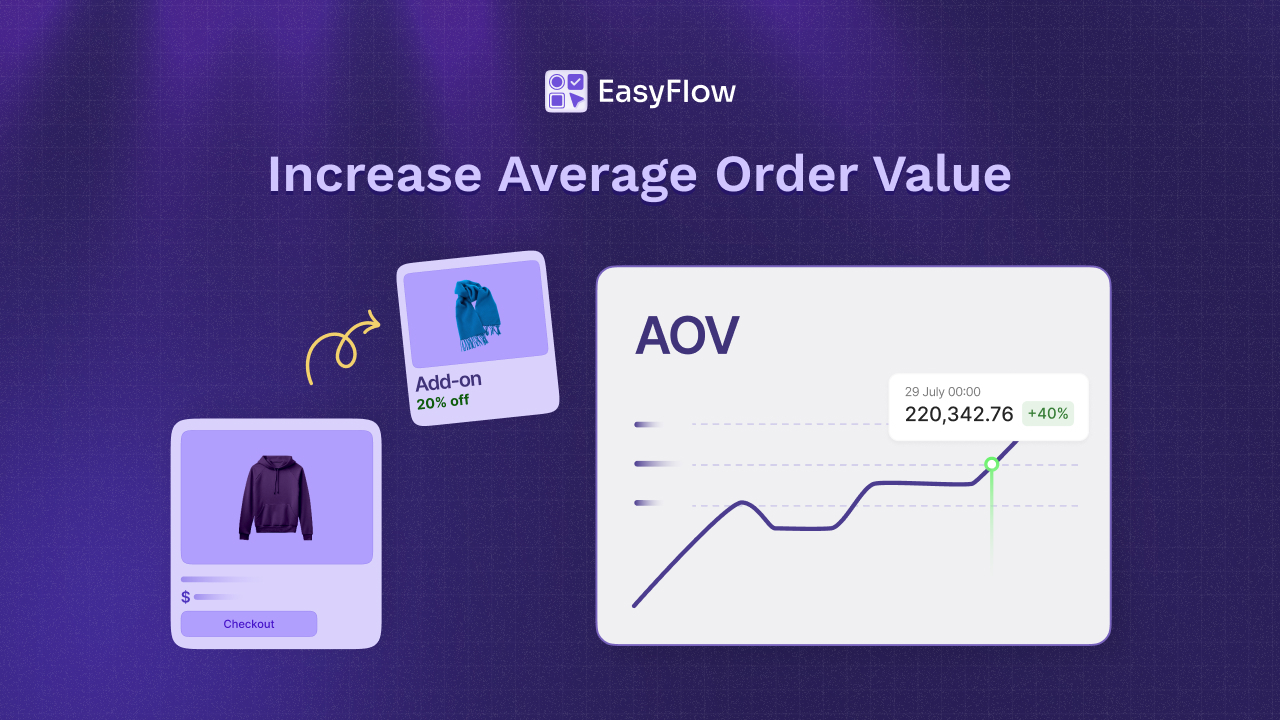
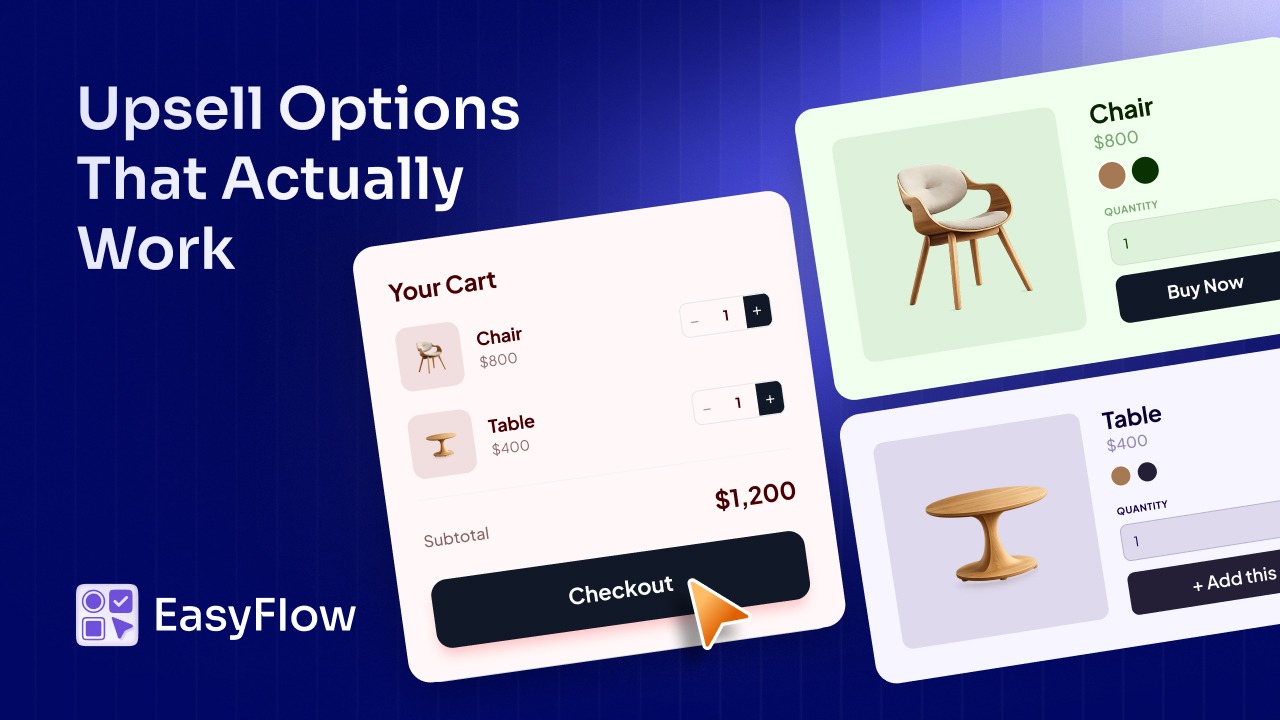
When customers build their own product, they are naturally exposed to upsells and add-ons in a context that feels helpful rather than pushy. A customer choosing a gift set, for instance, might add premium packaging not because you pushed it on them, but because it fits the story they are telling through their choices.
Studies by Epsilon show that personalized experiences drive a 40% higher revenue contribution than non-personalized experiences.
Lower Return Rates
One of the quietly brilliant benefits of product customization in Shopify is a dramatically lower return rate. When customers choose exactly what they want, the right color, the right fit, the right finish, the product actually matches their expectations. There is no guessing whether “navy” looks the same on screen and in real life. They picked it. They own that decision.
Returns are one of the highest hidden costs in eCommerce, averaging 15–30% of online orders. Even a modest reduction in return rates through better product configuration tools can significantly improve your net profitability.
Reduced Decision Fatigue Through Guided Customization
Here is a nuance that matters: too many Shopify product options can cause decision fatigue and actually hurt conversions. The key is structured customization, presenting choices in a clear, sequential, visually guided way.
Barry Schwartz’s famous “Paradox of Choice” research shows that beyond a certain threshold, more options lead to lower satisfaction and higher decision avoidance. The best product customization experiences present options progressively, not all at once, guiding shoppers through a logical flow that feels effortless rather than overwhelming.
This is exactly why the interface of your product customizer matters as much as the options themselves. A well-designed customization flow, one that shows options step-by-step, displays a live preview, and makes each choice feel like progress, is a CRO tool in its own right.
The Role of Shopify Product Options in the Buyer’s Journey
Let us map how Shopify product options touch every stage of the conversion funnel.
Awareness And Discovery
Customizable products stand out in search results and social feeds. “Design your own” or “personalized” in a product title is a significant click-through rate booster because it signals uniqueness. When someone can not find exactly what they want from standard listings, a customizable option becomes instantly attractive.
Consideration Stage: The Configuration Experience
This is where CRO (Conversion Rate Optimization) psychology is most at work. The configuration experience, how intuitive, visual and engaging your Shopify product options interface is, determines whether a shopper stays or leaves. Key psychological design principles here include:
- Visual feedback loops: Show a live preview as options are selected. This activates the endowment effect and reinforces commitment.
- Progress indicators: Step-by-step flows reduce cognitive load and leverage the Zeigarnik Effect, our tendency to remember and feel compelled to complete unfinished tasks.
- Smart defaults: Pre-selecting the most popular options reduces friction while still allowing full control. Shoppers can accept the defaults or customize further.
- Validation and encouragement: Small signals like “Great choice!” or showing how many others chose the same option tap into social proof and positive reinforcement.
Decision Stage: From Configuration to Cart
The moment of truth. After investing time in configuring a product, the path from “configured” to “add to cart” should be as frictionless as possible. This means a clear summary of the customer’s choices, a prominent price (including any customization upcharges presented transparently) and a single, unmistakable call-to-action.
💡One often-overlooked tactic: show the customer a visual summary of their customized product at the point of adding to cart. This reactivates all those psychological commitments and makes the final click feel like a celebration of their choices, not a transaction.
What Makes a Great Shopify Product Customization Experience?
Not all customization is created equal. Here is what separates a conversion-optimized product customization in the Shopify experience from one that frustrates customers and kills sales.
| What Works | What Hurts Conversions |
| Live product preview as options change | Showing all options at once without hierarchy |
| Mobile-optimized option selectors | Tiny or unclear option selectors on mobile |
| Clear conditional logic (only show relevant options) | Hidden price changes revealed at checkout |
| Price transparency at every step | No visual feedback when an option is selected |
| Image swatches instead of text dropdowns | Slow page loads during configuration |
| Error validation before checkout | Confusing or ambiguous option labels |
| Saved configurations for returning customers | No way to review choices before adding to cart |
Why Custom Product Options Need to Be More Than Just Dropdowns
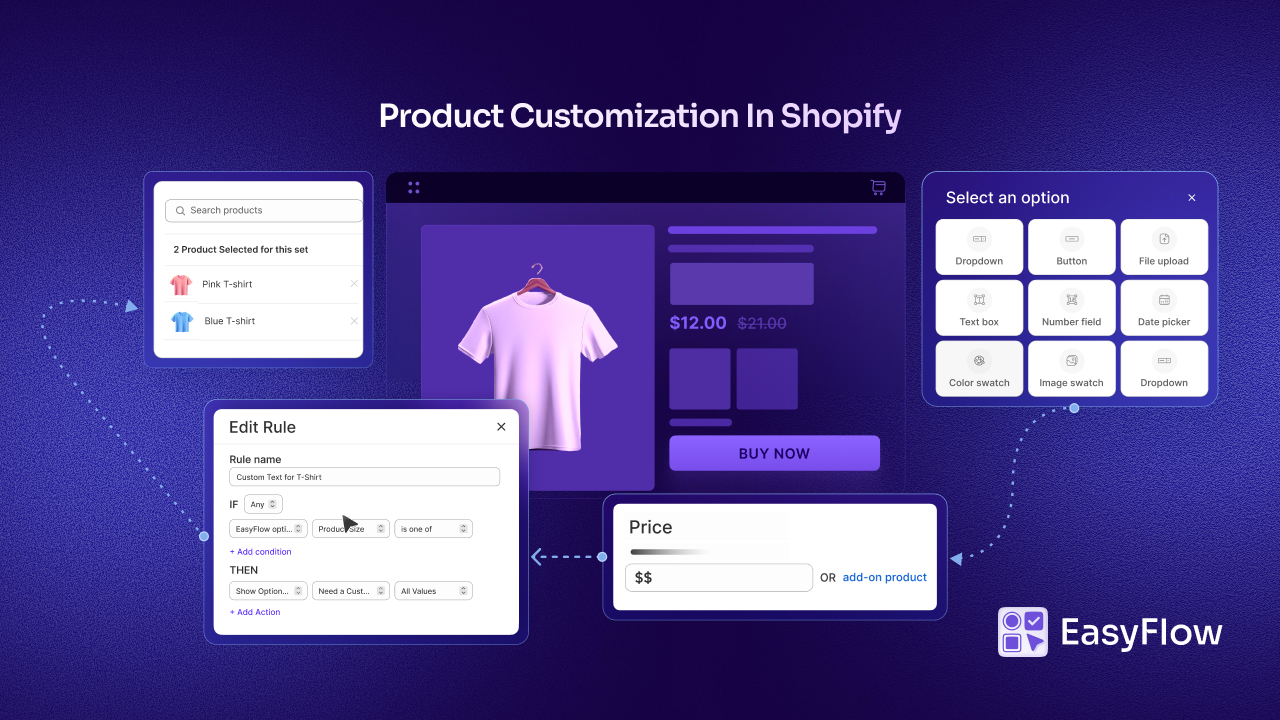
Standard Shopify stores are limited in the number of custom product options they can display natively. The default Shopify interface allows three options per product and they are mostly rendered as dropdowns, which are among the least engaging UI components from a psychological standpoint.
Why? Because dropdowns hide choices. They require an extra click to reveal options, they do not support visual swatches and they make it hard to compare options side by side. From a CRO psychology perspective, hidden options are missed opportunities to activate the IKEA Effect, endowment and commitment.
This is why extending your Shopify product options with a purpose-built tool matters. You want your configuration interface to feel like a creative experience, not a form to fill out.
What the Data Says About Customization And Conversion
Let us put some numbers to everything we have discussed.
- A study by Bain & Company found that companies delivering personalized experiences grow revenues 4–8% above their market.
- McKinsey research shows that 71% of consumers expect companies to deliver personalized interactions, and 76% get frustrated when this doesn’t happen.
- According to Shopify’s own commerce trends data, merchants offering product personalization see a measurable improvement in repeat purchase rate. Personalized products create brand memories.
- A Harvard Business Review analysis of configurator tools found that customers who used them spent on average 14 minutes longer on product pages and that extended engagement time strongly correlated with purchase completion.
That last point is particularly important through the lens of CRO psychology. A longer time on the page is usually a sign of high intent.
With standard product pages, long time-on-page can sometimes mean confusion. But with a well-designed customizer, it means engagement and commitment, exactly what you want from a CRO standpoint.
How EasyFlow Brings CRO Psychology to Your Shopify Product Options
EasyFlow is built specifically to help Shopify merchants apply the principles of CRO psychology to their product pages. Through flexible Shopify product customization options, this app helps merchants with –
Unlimited Custom Product Options
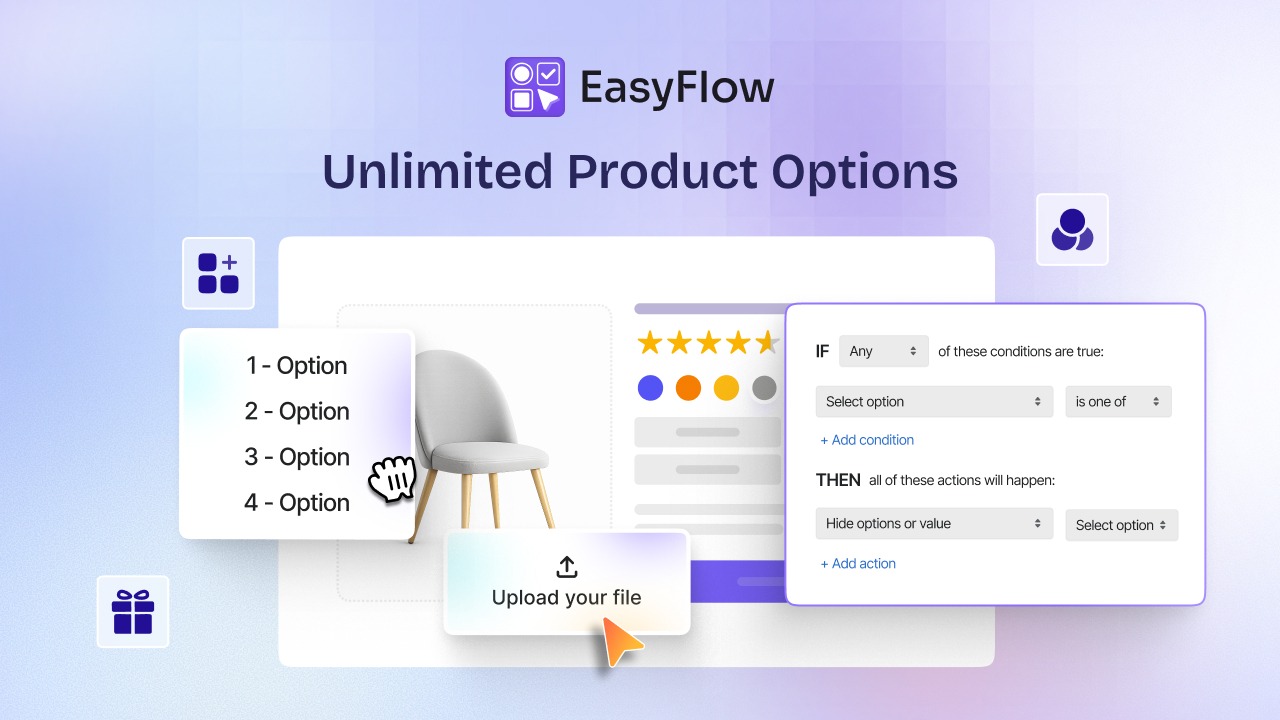
EasyFlow removes Shopify’s native 3-option limit and lets you create as many custom product options as your products need, like text inputs, dropdowns, checkboxes, color swatches, image swatches, file uploads, date pickers, and more. Every option type is designed with conversion psychology in mind: visual swatches over hidden dropdowns, image previews, and real-time price updates.
Conditional Logic That Reduces Decision Fatigue
EasyFlow’s conditional logic shows or hides options based on what a customer has already chosen. This means customers only ever see the options that are relevant to their specific configuration. This dramatically reduces cognitive overload while keeping the experience feeling personal and intelligent.
Mobile-First Customization for Shopify Product Options
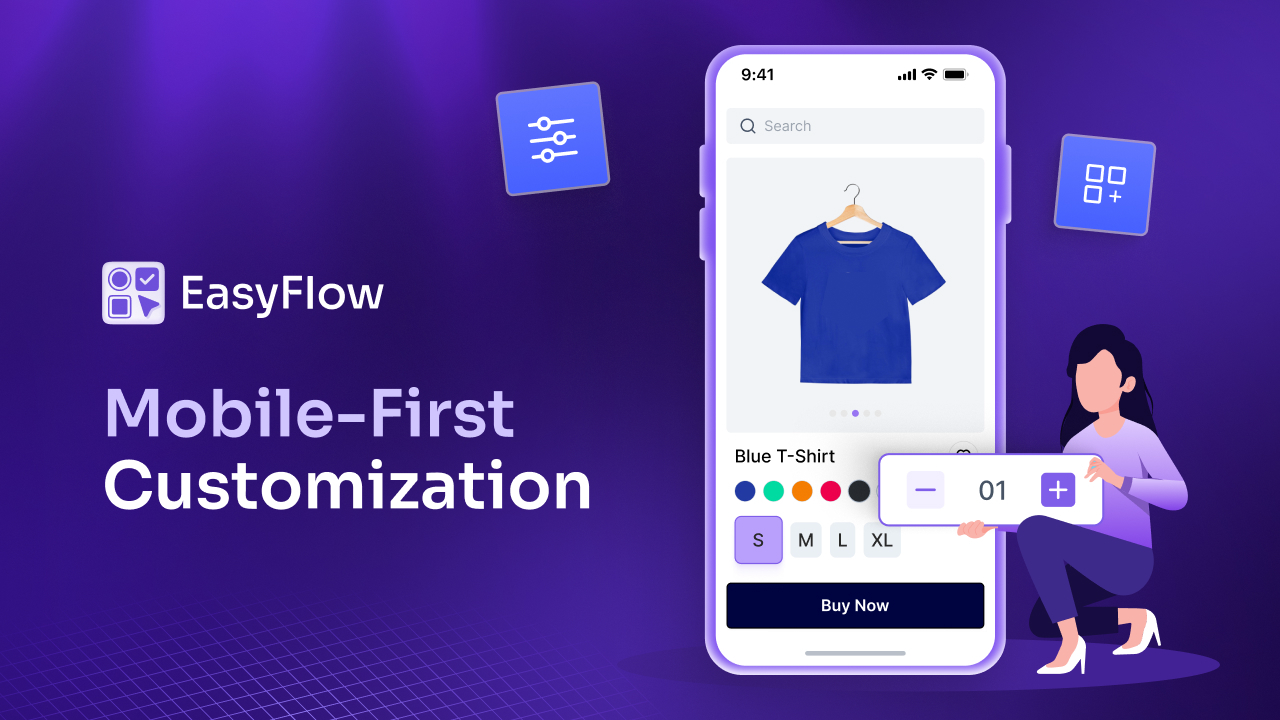
Over 60% of eCommerce traffic now comes from mobile devices. EasyFlow’s Shopify product options interface is designed for thumbs first, large tap targets, swipe-friendly option selectors, and a layout that guides mobile shoppers through choices without squinting at tiny dropdowns. Mobile CRO is no longer optional, and EasyFlow makes it native.
Putting It All Together: A CRO Psychology Checklist for Your Custom Product Pages
Before we wrap up, here is a practical checklist to audit your current product pages through the lens of CRO psychology and product customization in Shopify.
- Activate the IKEA Effect: Do your customers make real choices, or just pick from presets? The more authorship they have, the more they value the product.
- Reduce cognitive load: Are your Shopify product options presented progressively, with conditional logic hiding irrelevant choices?
- Enable the endowment effect: Is there a live visual preview that reflects customer choices in real time?
- Build commitment: Is there a clear step-by-step flow, or are all options dumped on the page at once?
- Reduce loss aversion friction: Do customers see a personalized summary of their choices before checking out?
- Optimize for mobile: Are your custom product options easy to interact with on a phone screen?
- Be transparent about pricing: Are any customization upcharges shown inline, not revealed as a surprise at checkout?
- Measure and iterate: Are you A/B testing different option presentations to see what drives the most conversions?
Transform Personalization Into Purchase Decisions
The connection between CRO psychology and customizable products in eCommerce is not a trend; it is a fundamental truth about how human beings make decisions. Customers value and feel ownership over things that they configure. That makes it harder to walk away from something that feels like ours.
The Shopify merchants who understand this and build their product pages around these principles are not just offering “personalization as a feature.” They are creating conversion experiences that work with human psychology rather than against it.
With the right approach to Shopify product customization, one that is visually engaging, psychologically informed and technically seamless, you are not just giving customers more choices. You are giving them ownership, identity, and commitment. And that is worth far more than any coupon code.
Was this blog helpful? If you want more guides, tutorials and tips like this, please subscribe to get the updates.