
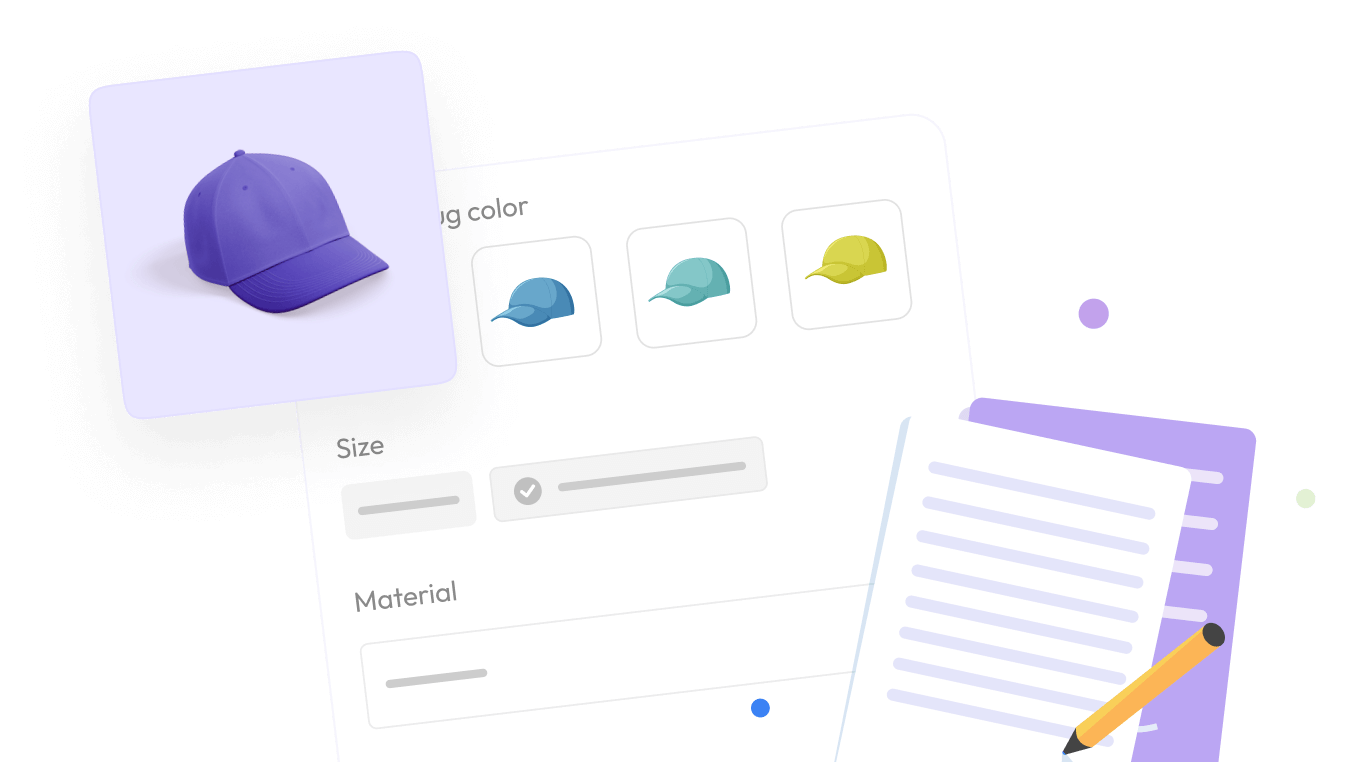

Not too long ago, “personalization” was seen as a premium perk that only big brands could afford to offer. Now it is closer to a customer’s expectation. People want the product to feel like it belongs to them, not like it came off the same shelf as everyone else’s.
And for Shopify merchants, that shift is more than a trend. It is a revenue opportunity. The product customization benefits are real: higher cart totals, fewer “not exactly what I wanted” complaints and stronger customer loyalty that does not depend on discounting.
In this guide, we will unpack what personalization really means, why it works so well for ecommerce and how to set it up on Shopify without drowning in variants or operational chaos.
Why Product Customization on Shopify Feels Complicated at First?
At the start, customization sounds simple: “Let customers choose a few options.” But once you try to implement it, Shopify’s default flow can feel like it is working against you. That is where most merchants get stuck, right before enjoying the benefits.
The common pain points usually look like this:
- Variant limits and variant chaos (100 variants can disappear fast)
- Cluttered product pages when options are not organized
- Order confusion if customization details do not show clearly
- Extra back-and-forth with customers after checkout (“Can I change the text?”)
- Inconsistent pricing for add-ons (gift wrap, engraving, premium materials)
If you have ever avoided personalization because it sounded complicated, you are not alone. The good news is: with the right structure and the right tool, Shopify product customization can feel clean, simple and scalable.
Top Shopify Product Customization Benefits for eCommerce Growth
This is the part most merchants care about: will it really affect sales and customer happiness or is it just a shiny feature? When personalization is done right, it changes customer behavior, how long they stay on the page, how confident they feel buying and how much they are willing to spend.
Let us break down the product customization benefits that consistently show up for Shopify stores.
Higher Cart Totals (Increased AOV)
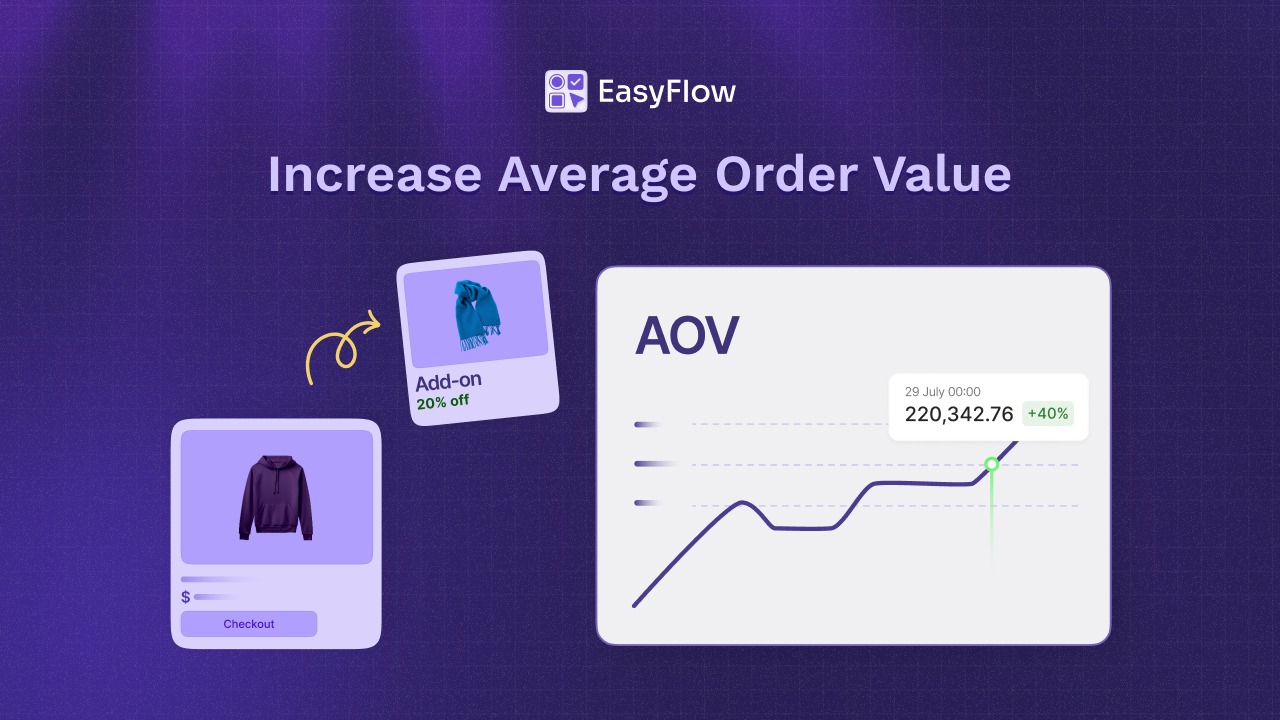
Think about the last time you bought something customized. You probably did not mind paying a little extra. Because the product felt more valuable once it had your name, your message or your choices baked into it. That same psychology is exactly why personalization works.
Personalization makes customers comfortable paying more because they are not buying a generic product anymore.
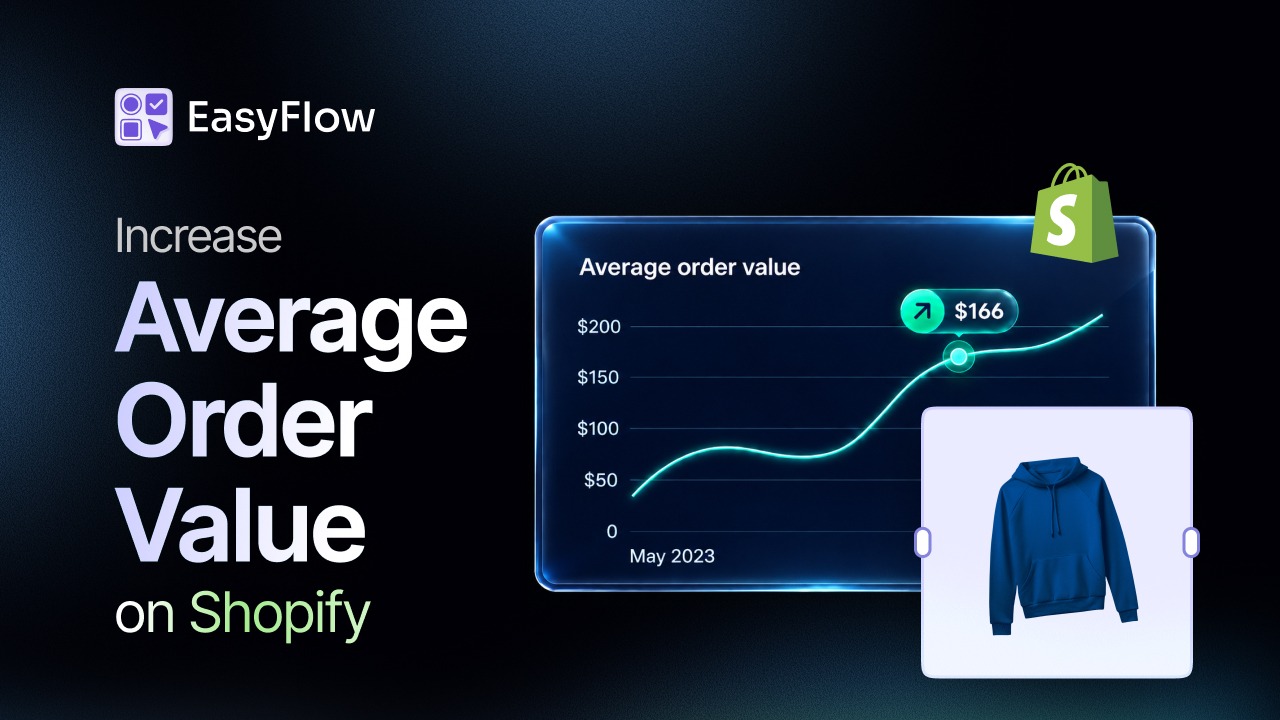
This is where you will often increase average order value (AOV) in multiple ways:
- Charging a small fee for custom text, monograms or file uploads
- Offering premium upgrades (better materials, gift packaging)
- Bundling extras that match the customized item (case + strap + initials)
When shoppers feel like they are building “their version,” price sensitivity tends to drop. They compare fewer alternatives and commit more emotionally, which is one of the most direct product customization benefits you will notice.
Better Customer Satisfaction (And Fewer Returns)
Customization reduces that classic eCommerce risk: “I hope it looks/feels right when it arrives.” When customers choose the details themselves, the product aligns more closely with what they imagined. So, satisfaction rises.
Strong product personalization typically leads to:
- Fewer “wrong item” complaints
- Fewer returns due to unmet expectations
- More positive reviews (“It turned out exactly how I imagined!”)
And because customized items feel personal, shoppers are less likely to return them unless something is genuinely wrong. That is why this is one of the most durable product customization benefits over time.
More Trust and Loyalty (Because It Feels Personal)
When customers personalize something, they invest effort. That effort creates attachment and attachment builds loyalty. It is not just a product anymore – it is a memory, a gift, an identity statement or a moment they want to repeat.
Personalization creates a stronger bond. This is a key advantage of eCommerce personalization: it turns a one-time purchase into a memorable experience.
Over time, that experience increases:
- Repeat purchases as gifts (holidays, birthdays, anniversaries)
- Word-of-mouth referrals (“They let me customize it!”)
- Social sharing (user-generated content is the cherry on top)
This is one of those product customization benefits you do not always see in week one. But you definitely feel it after a few months.
Differentiation in Crowded Markets
If you sell products that exist in many stores, you can not always win on “cheapest.” You can win on “most personal.” That is why personalization is such a strong strategy for niches that look crowded from the outside.
Customization gives your brand a clear competitive advantage. Offering flexible product options, even simple ones, creates a reason to choose your store. And because customization requires a real system behind it, competitors can not copy it instantly. That barrier protects your edge and it is one of the most underrated product customization benefits for scaling brands.
A More Engaging Product Page
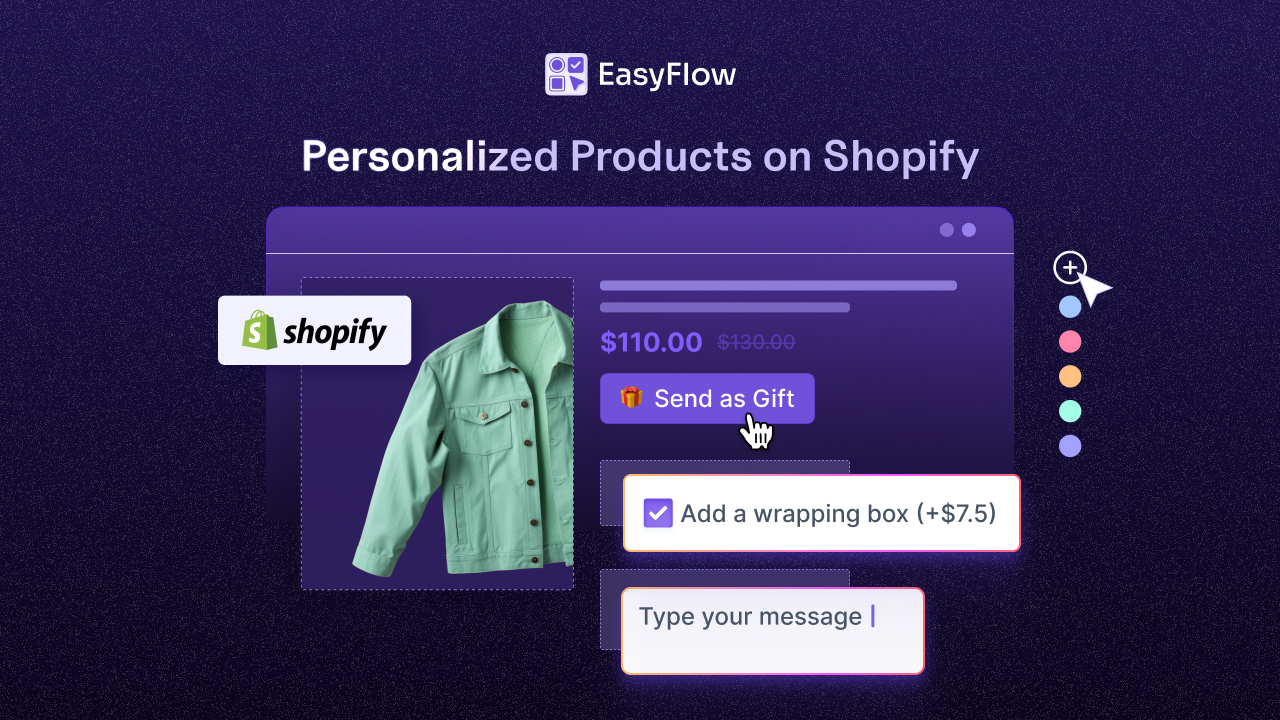
When customers interact with your product page, they stop browsing like a tourist and start browsing like a buyer. Clicking options, typing names, uploading files – those actions increase intent because they make the purchase feel real.
Customization turns browsing into interaction:
- typing,
- selecting,
- uploading,
- previewing (if you use previews).
This engagement increases purchase intent. Customers who invest time building a custom item are more likely to complete checkout, which is another strong addition to the list of product customization benefits.
How to Implement Product Personalization Without Complicating Your Store
The difference between “premium personalization” and “confusing product page” is usually the structure. If customers feel overwhelmed, they bounce. If fulfillment feels unclear, you make mistakes. So the goal is a flow that feels simple up front and organized behind the scenes.
Here is the rule that keeps everything sane:
Customization should feel fun for customers and predictable for you. That means:
- Options are grouped logically (not scattered everywhere)
- Pricing rules are clear
- Customization details show up clearly in orders
- You can scale personalization without adding 200 variants
When you get these right, the product customization benefits show up faster and more consistently.
Build Shopify Product Customization Without Variant Overload
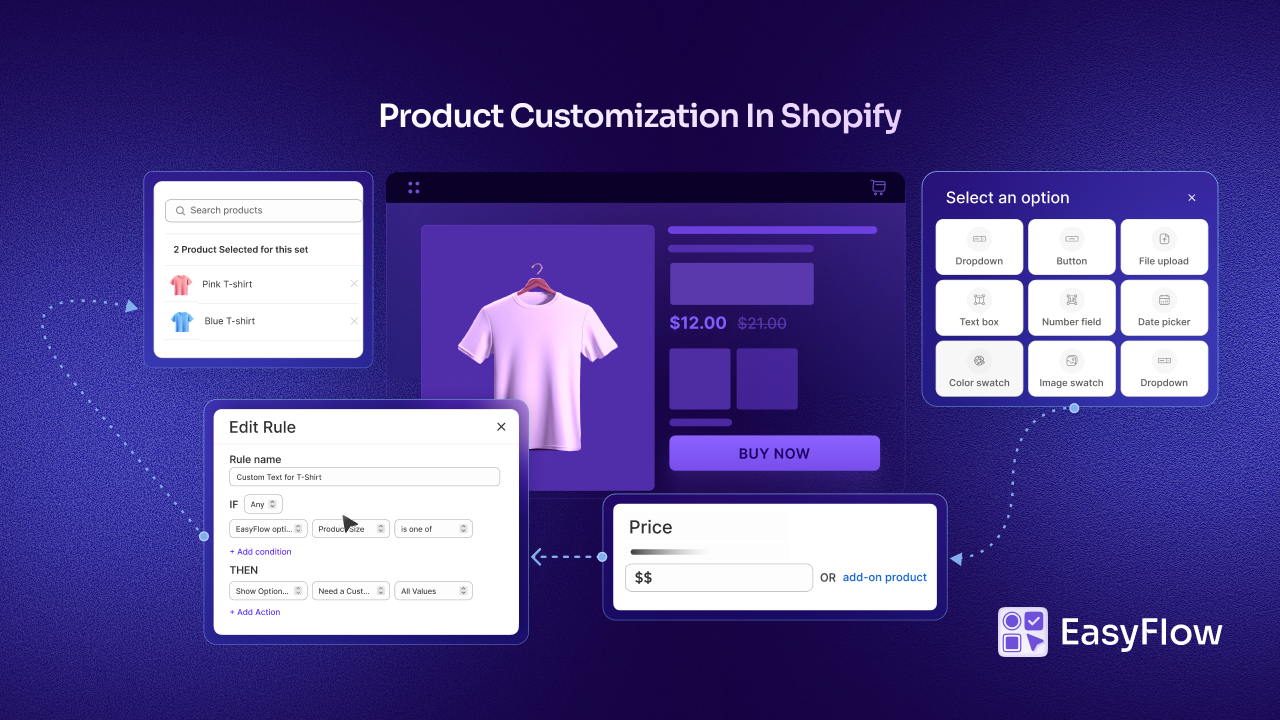
Most merchants start with variants because they are built in. And for basic options, they work. But personalization scales differently. The minute you add multiple option types (text + colors + sizes + materials), variants explode and your inventory becomes hard to manage.
The problem with variants is that every combination multiplies: 5 colors × 5 sizes × 4 materials × 3 prints = 300 variants (oops)
Instead, the smarter route is custom product options that keep your core product simple while capturing personalization cleanly. This approach supports scalable Shopify product customization without turning your backend into a spreadsheet nightmare.
Step-by-Step: Set Up Product Personalization the Smart Way
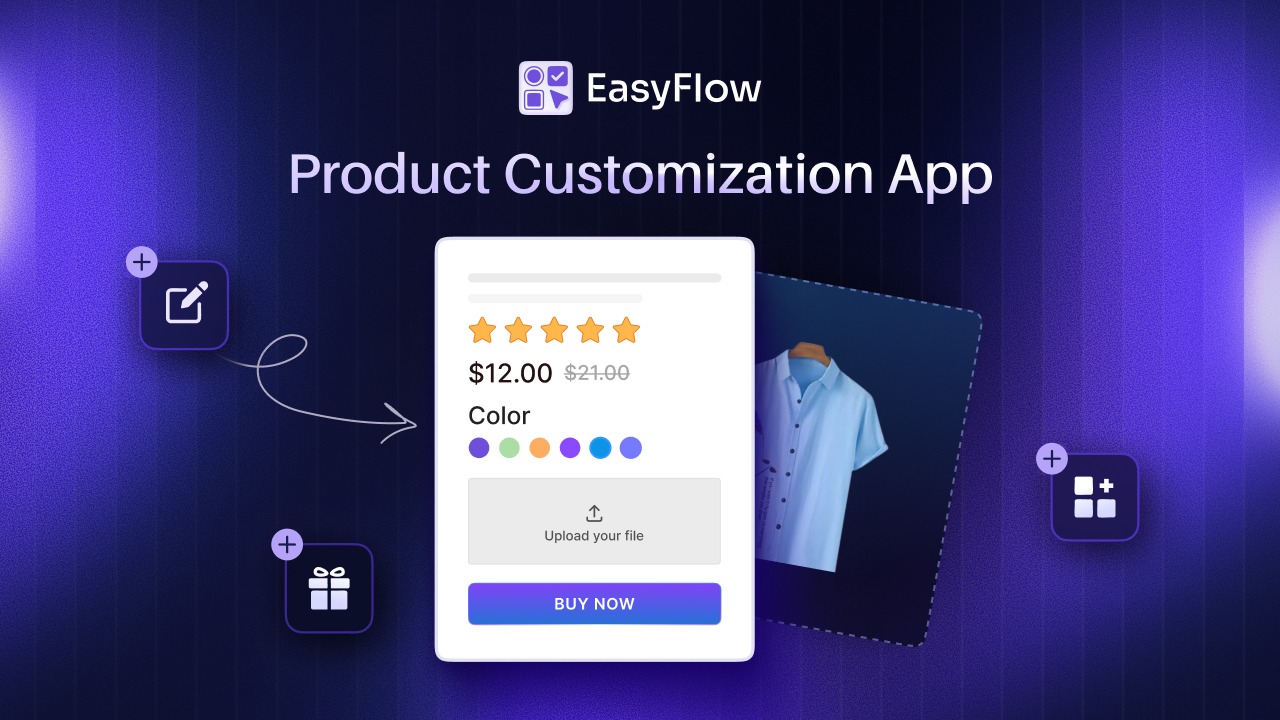
Let us make this practical. The best setups are the ones that customers understand instantly and your team can fulfill without guessing. Below is a workflow you can apply across gifts, apparel, accessories, home decor and even B2B. You can implement it using tools like EasyFlow without touching code.
Step 1: Pick Your “Core” Customization Set
If you try to launch with 12 options, you will spend more time testing than selling. Starting small helps you learn what customers actually use and what they ignore.
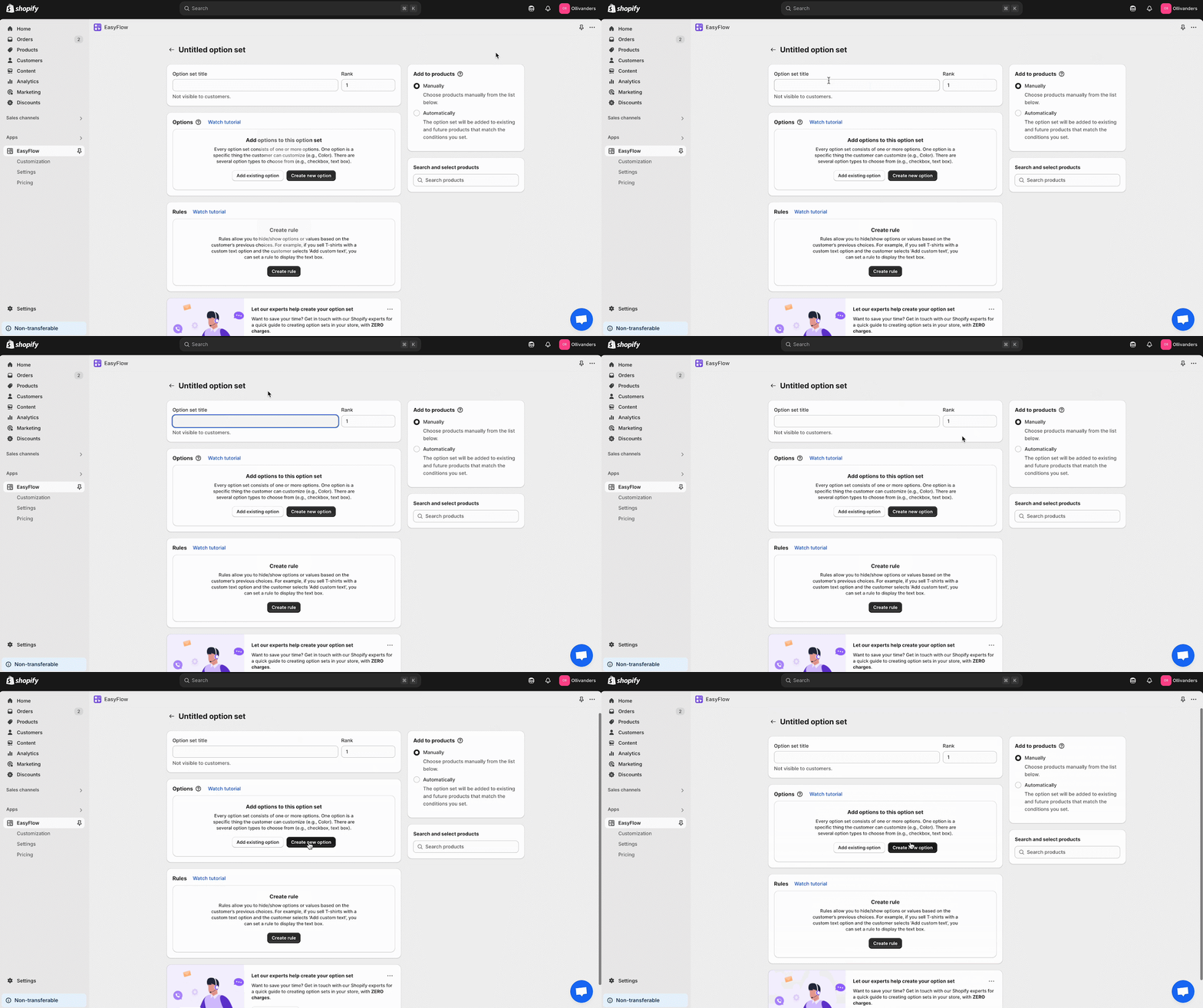
Start with 1 – 3 option sets that customers actually care about. Good starter options:
- Name/initials/short message (text field)
- Color or finish (swatches/dropdown)
- Gift note (text area)
This is often where product personalization starts paying off quickly, because you are adding value without adding confusion.
Step 2: Add Clear Labels and Examples
Most customization “mistakes” happen because the customer was not sure what to enter. Clear labels prevent misunderstandings and reduce the chances of refund requests later.
Customers should never guess what to type. Use labels like:
- “Engraving text (max 12 characters)”
- “Upload your logo (PNG/JPG, max 10MB)”
- “Gift message (optional)”
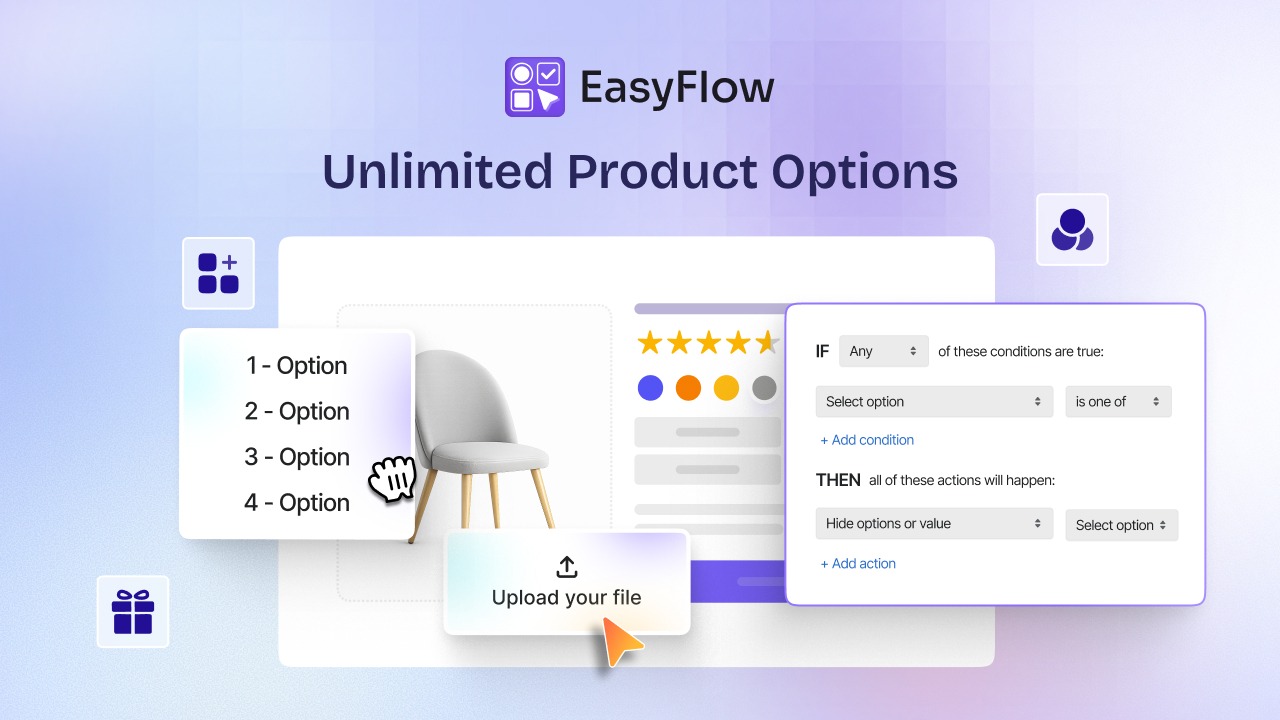
Step 3: Use Conditional Logic to Keep the Page Clean
Conditional logic is how you keep customization powerful without making the page feel crowded. Customers only see what matters to them based on what they choose. So, it feels smooth, not overwhelming.
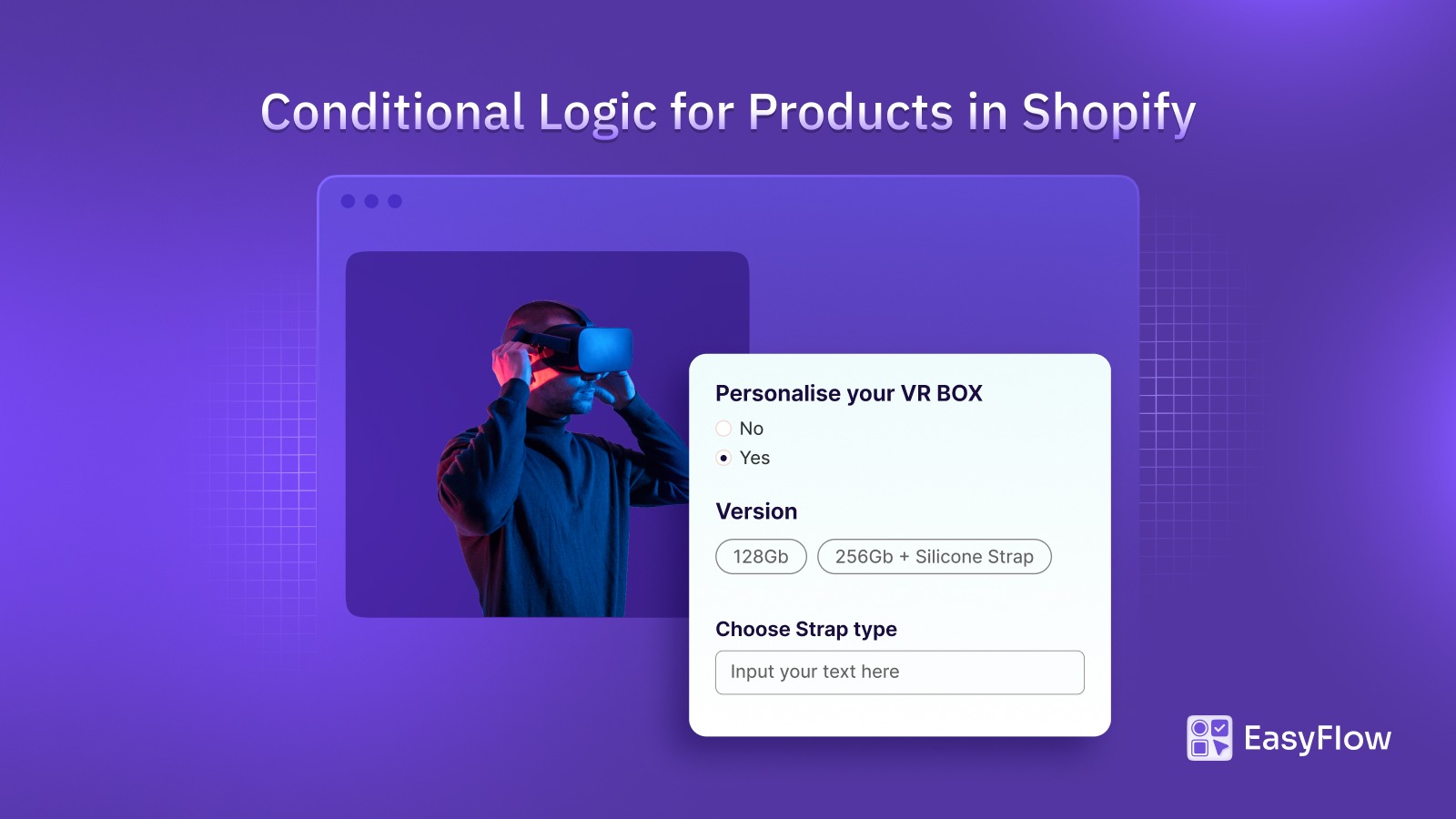
Example:
- If “Add gift wrap” = Yes → show “Gift message”
- If “Upload logo” = Yes → show “Upload file” field
- If “Engraving” = Yes → show “Engraving text” field
This is a big win for eCommerce personalization because it keeps the experience premium and organized.
Step 4: Add Pricing Rules for Upgrades
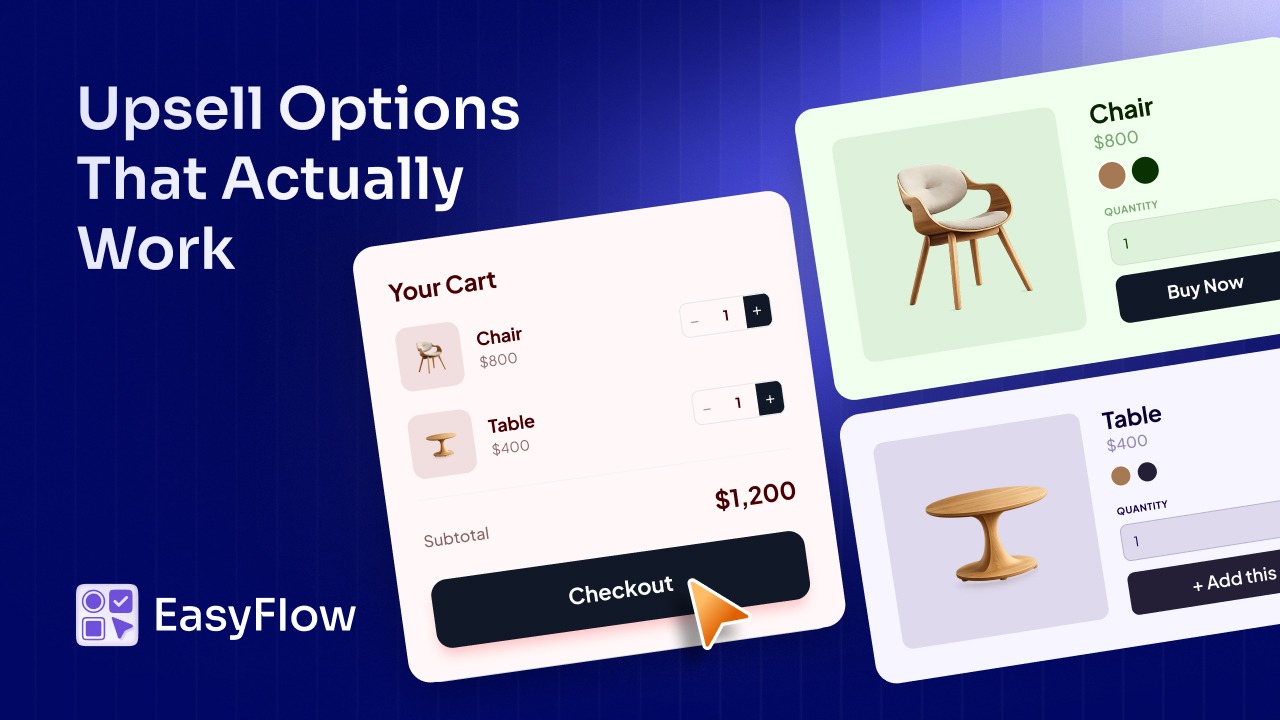
This is where personalization becomes a growth engine. When upgrades are clear and customer-driven, they do not feel like upsells; they feel like choices. And those choices often lift revenue per order.
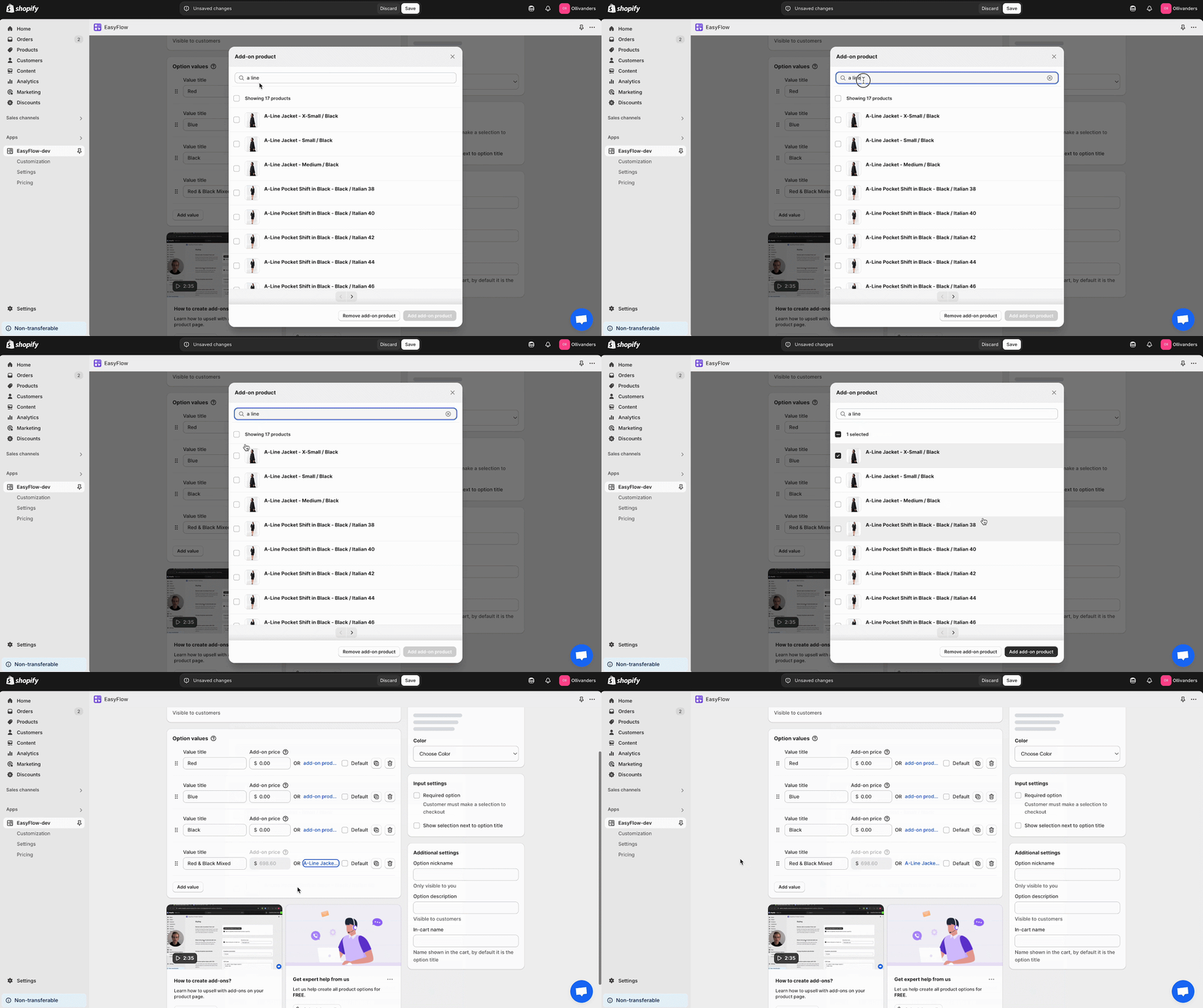
Want to increase average order value (AOV) without being salesy? Pricing add-ons do it naturally. Common add-on pricing ideas:
- +$5 for engraving
- +$3 for gift wrap
- +$10 for premium materials
- +$2 for rush processing
Over time, pricing upgrades become one of the most measurable product customization benefits you can track.
Step 5: Test the Full Flow Like a Customer
A setup can look perfect in your editor and still break in real life, especially on mobile. Testing the whole flow protects you from costly mistakes.
Before you launch, run through:
- Mobile view (most shoppers are on phones)
- Field validation (character limits, required fields)
- Cart display (does it show the selections clearly?)
- Order admin view (is the customization info easy to find?)
This step prevents fulfillment mistakes, which protects reviews and keeps your Shopify product customization operation scalable.
Best Practices to Maximize Product Customization Benefits
Customization is not just “add options and hope.” The brands that win treat personalization like a product experience one that should feel simple, consistent and trustworthy. These best practices protect the customer experience and your backend workflow. Here is the checklist that keeps customization profitable:
Keep Option Sets Consistent Across Products
Consistency is one of those hidden product customization benefits. It makes personalization feel “native” to your brand. Customers feel more confident when your store behaves predictably. If you sell multiple personalized items, keep the structure familiar:
- Same label style
- Same “required vs optional” pattern
- Same placement on the product page
Do Not Ask for Too Much Information
Customers love personalization, but not a long form. Less friction means better conversions, stronger eCommerce personalization, and higher AOV over time. If it takes too long, they skip the customization or leave entirely. If you need a lot of details, consider:
- breaking it into steps
- using conditional fields
- making only critical fields required
Show “What Happens Next”
Most complaints do not come from the product; they come from unclear expectations. A simple line with help texts about timelines and rules prevents confusion later.
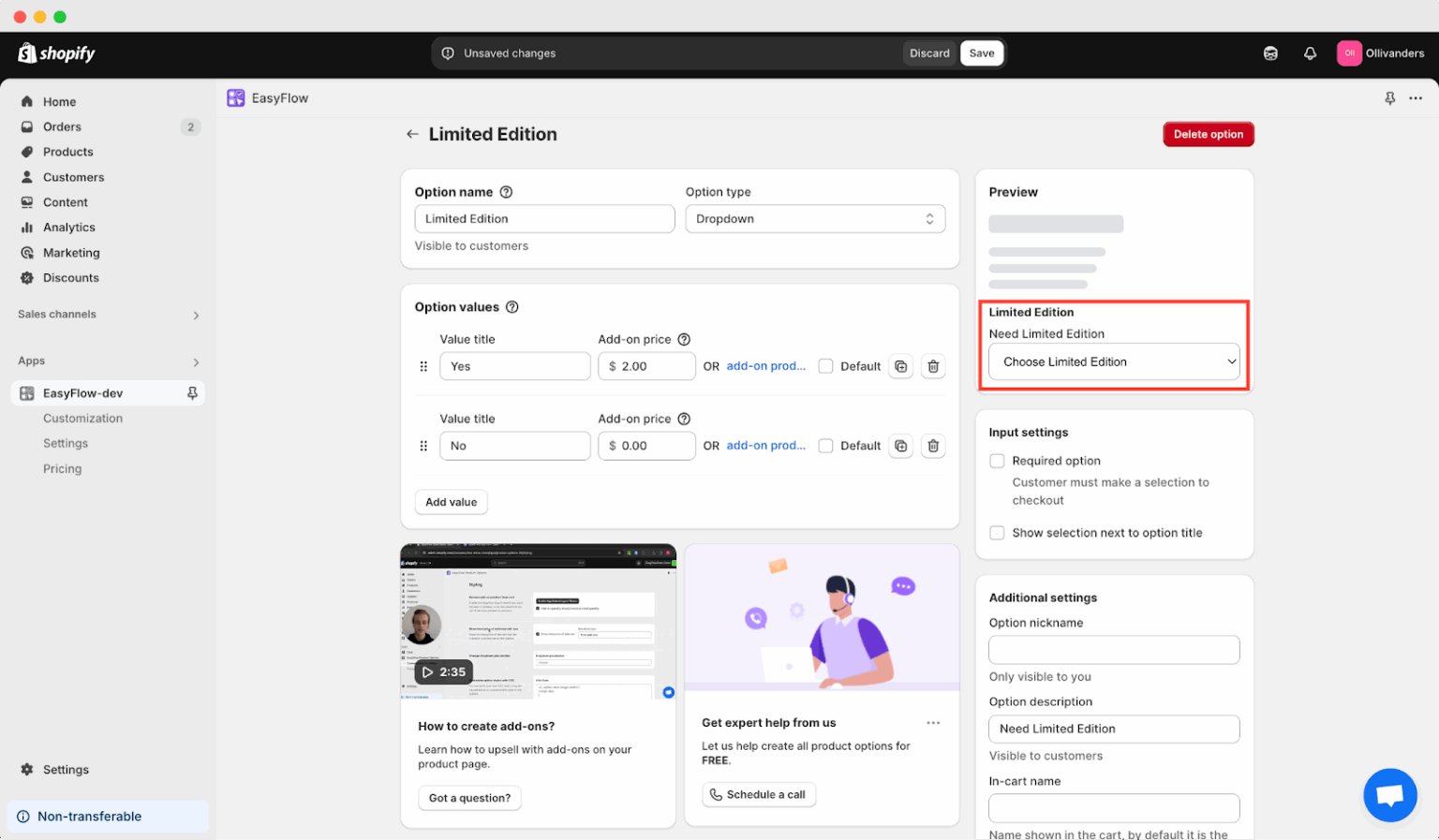
Set expectations clearly, ask questions, add value:
- “Need limited editions?”
- “We’ll send a proof within 24 hours”.
This protects customer satisfaction and helps you fully realize the product customization benefits.
Make personalization gift-friendly
If your store sells anything giftable, personalization and gifting options naturally go together. These fields do not feel salesy; they feel helpful. And they often increase cart totals without effort.
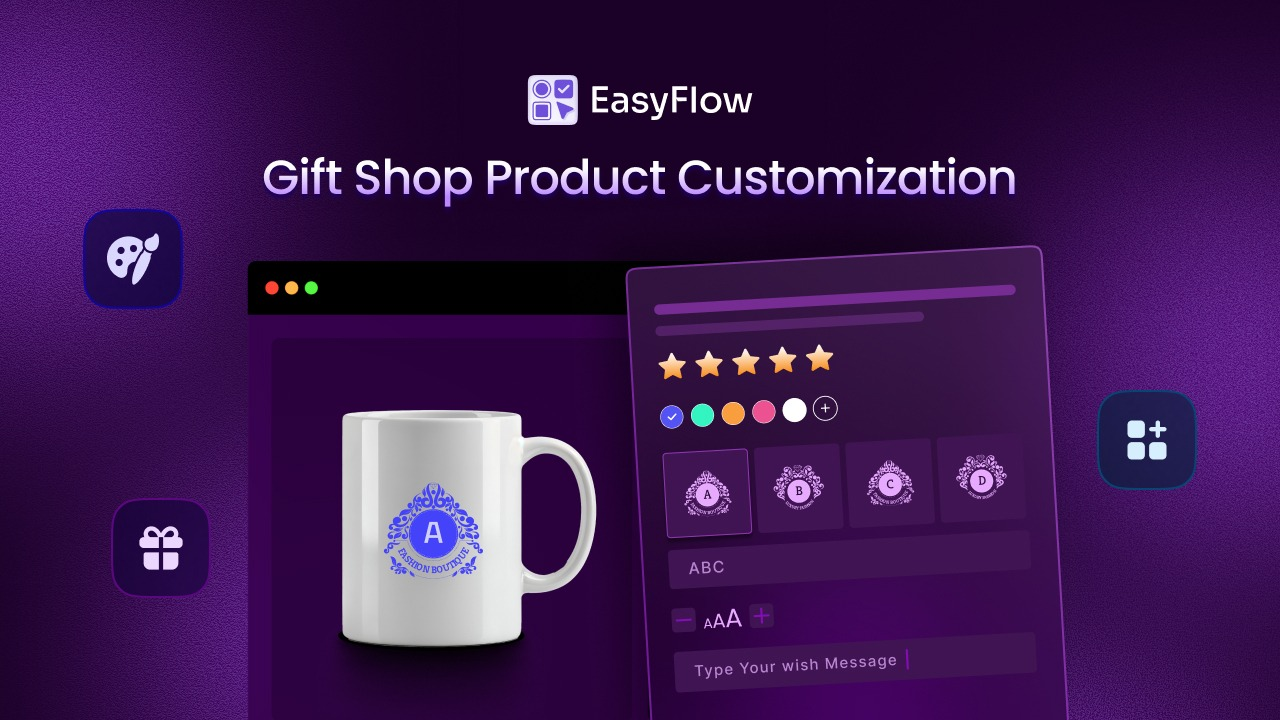
Add small touches like these to support personalized products and increase average order value (AOV) as a natural byproduct.
- Gift wrap checkbox
- Gift message field
- “Send as a gift” note
Make Personalization Easy and Keep It Profitable
The real goal is not just adding more options, it is creating a shopping experience that feels thoughtful, easy and memorable. When customers feel like your store “gets them,” they spend more, return more and recommend you more. That is the power behind personalization.
Start small, keep the flow clean, use conditional logic where it helps and price upgrades transparently. Do that consistently, and you will see product customization benefits show up in your numbers and in your reviews.
If you found this helpful, please subscribe for more guides, tutorials and tips to help you get more out of your Shopify store.